
Collection: 360 Degree Camera For Car


-
Blaupunkt BP-3600 HD 360° View Camera System | High-Definition Camera Clarity
Regular price Rs. 7,220Sale price Rs. 7,220 Regular priceUnit price perRs. 12,350Sale -
Philips 360° Camera Kit for Android Car Stereo | 4-Camera 360° Surround View | 1080P
Regular price Rs. 8,180Sale price Rs. 8,180 Regular priceUnit price perRs. 12,990Sale -
Park Maxx 360° AVM 4-Ways Car Camera System | Super 1080P AHD | Bird View
Regular price Rs. 5,280Sale price Rs. 5,280 Regular priceUnit price perRs. 9,990Sale -
Moco C-40 360° Bird View 4-Camera Add-On Kit for Android Player | Full HD 1080p | CCD Lens | 170° Wide Angle | Night Vision
Regular price Rs. 6,880Sale price Rs. 6,880 Regular priceUnit price perRs. 13,990Sale


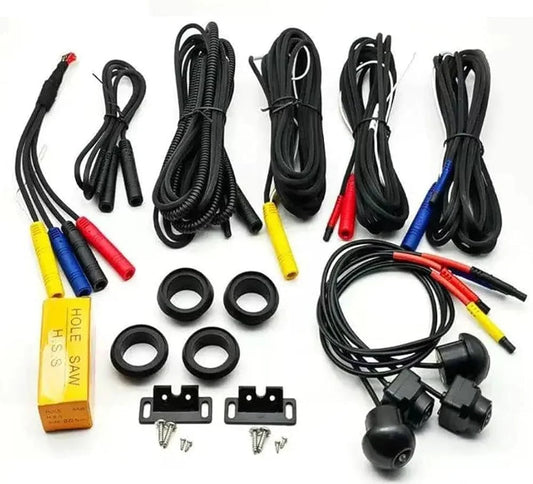

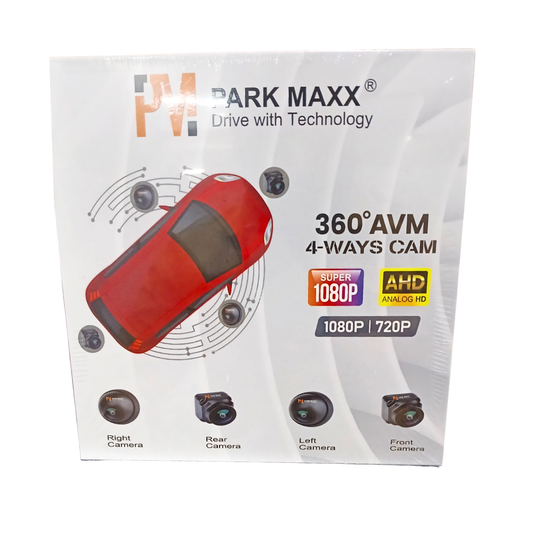

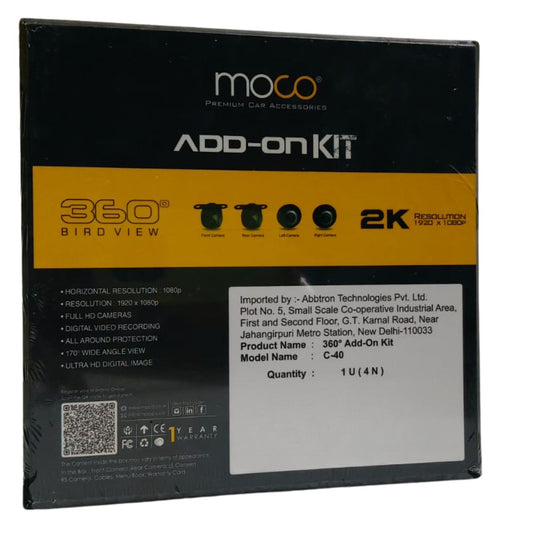
Every driver in India knows the challenge of parking in a congested society lot, squeezing through a narrow lane, or reversing into a tight spot on a busy street. Standard rear cameras and side mirrors leave substantial blind spots on both sides of the car and at the front bumper, which is where most low-speed parking damage actually occurs. A 360 degree camera for car eliminates these blind spots entirely by giving you a live, real-time bird's-eye view of the complete area surrounding your vehicle on the head unit screen. At NHone, we stock the Blaupunkt BP-3600 HD 360 Degree View Camera System, a professional-grade 4 camera car system rated 5.0 out of 5.0 by verified buyers that brings surround-view technology to any car equipped with a compatible Android head unit.
What Is a 360 Degree Camera for Car and How Does It Work?
A 360 degree camera for car is a multi-camera system that uses four wide-angle cameras to simultaneously capture the complete perimeter of your vehicle. A dedicated processing unit receives all four feeds, corrects for lens distortion, and stitches them into a single composite top-down image displayed on your head unit screen in real time. This image is known as the bird eye view car camera view, and it shows your car from directly above with the full road, parking lines, obstacles, and kerbs visible on all four sides in a single frame.
Here is the complete flow of how the system works:
-
The four cameras are positioned at the front grille, rear bumper, left side mirror, and right side mirror
-
Each camera captures approximately 190 degrees of field of view, ensuring overlapping coverage between adjacent cameras
-
The processing unit simultaneously receives all four AHD video feeds without lag
-
A de-warping algorithm corrects each fisheye lens feed into a flat, overhead perspective
-
The four corrected images are blended at their edges using overlap stitching to create a seamless composite
-
The final top-down image updates in real time on your Android head unit screen as you drive and manoeuvre
Why a 360 Degree Car Camera Is the Most Complete Parking Safety Upgrade Available
A 360 degree parking system addresses every blind spot simultaneously from a single screen view, which no combination of mirrors or single-camera setups can replicate. For Indian driving conditions specifically, the value is particularly high because parking environments are among the most challenging in the world.
Key scenarios where a surround view camera system makes a measurable difference:
-
Apartment basement parking with low barriers, pillars, and narrow ramps where the car's sides are within centimetres of concrete structures
-
Street parking alongside auto-rickshaws and motorcycles that approach from angles mirrors cannot cover
-
Multi-storey parking garages with tight turning radius and blind corners
-
Narrow service lanes in commercial areas where door-to-door clearance is minimal
-
High kerbs that damage alloy wheels when parking along roadsides
-
Forward parking into walls or bollards where the front bumper is not visible over the bonnet
Each of these scenarios is resolved by the 360 degree auto camera because it shows the driver exactly how much clearance exists on every side before committing to the manoeuvre.
The Four Camera Positions in a 360 Degree Car System
The four-camera layout of a 360 degree automotive camera system is what makes it fundamentally different from any single or dual-camera alternative. Each camera covers a specific zone around the vehicle, and together they create complete, overlapping perimeter coverage.
Front Camera
The front camera is the parking view that no other system provides. It is mounted in the front grille or bonnet badge area and faces forward and slightly downward:
-
Shows the road immediately ahead of the front bumper in real time
-
Helps when pulling up to a wall, bollard, or parking stop that is not visible over the bonnet
-
Shows the front wheel position relative to a kerb when pulling forward into a bay
-
Eliminates the guesswork when driving into tight garage openings or building entrances
Rear Camera
The rear camera contributes to the 360 degree car cam composite view as well as providing a standalone reverse-assist feed when needed:
-
Mounted at the boot lip or number plate housing
-
Points backward and downward to cover the road immediately behind the rear bumper
-
Shows rear wheel proximity to kerbs, walls, and parking stops when reversing
-
Overlaps with the left and right mirror cameras to create seamless joins at the rear corners
Left and Right Side Mirror Cameras
The side mirror cameras are the defining feature of the 360 degree parking system and the cameras that provide the most unique value compared to any standard camera setup:
-
Mounted in or under the side mirror housings, pointing downward toward the road surface alongside the car
-
Show the position of the door panels and side sills relative to walls, pillars, and parked vehicles
-
Capture front and rear wheel positions next to kerbs and parking lines with precision that mirrors cannot provide
-
Reveal obstacles alongside the car such as motorcycles, pillars, and shopping trolleys that approach from the side
How the Bird's-Eye View Image Is Generated
The top-down composite image that appears on screen during a 360 degree camera for car operation is not a single camera feed. It is a real-time computed image, and understanding how it is generated explains both why it looks the way it does and why calibration is essential for accuracy. The image generation process follows a specific sequence inside the system's processing unit:
-
All four AHD camera feeds are captured simultaneously by the processing unit
-
Each feed is mathematically de-warped to remove the fisheye lens distortion and convert the curved wide-angle image into a flat overhead perspective
-
The four de-warped images are aligned to a common coordinate frame representing the vehicle's outline
-
Overlap blending at the four join points smoothly merges the adjacent feeds into a single seamless image
-
The composite is scaled and oriented so the car's silhouette appears at the centre of the screen with the surrounding road visible on all four sides
-
The image refreshes continuously in real time as the vehicle and objects around it move
The accuracy of this image depends directly on the calibration performed during installation. Without correct calibration, the join lines between camera feeds are visible, object distances appear distorted, and the vehicle outline does not align correctly with the composite view.
The Blaupunkt BP-3600 HD 360 Degree View Camera System
The Blaupunkt BP-3600 is the all around car camera system currently available in our collection and the product we stock after verifying it against our compatibility and quality standards. Blaupunkt is one of the most established automotive electronics brands in India, with a track record across car audio, dashcams, and camera systems that reflects genuine engineering investment. The BP-3600 is a professional-grade 4 camera car system designed for drivers who want surround-view technology that performs reliably in real Indian driving conditions.
Key specifications and features of the Blaupunkt BP-3600:
-
4-camera AHD system covering front, rear, left mirror, and right mirror positions
-
HD resolution across all four cameras for clear, detailed imagery in daylight and low-light conditions
-
AHD (Analog High Definition) sensor technology for sharper performance in basement parking and night conditions compared to standard CVBS cameras
-
Compatible with Android head units that include 360-degree camera processing capability
-
Rated 5.0 out of 5.0 by verified buyers
-
Includes the central processing unit that handles the real-time stitching and composite image generation
The BP-3600 is designed to work with aftermarket Android head units from brands including Nakamichi, Blaupunkt, YueMi, Onkyo, and others in our collection that include 360-degree camera software support. Contact our team via WhatsApp before purchasing to confirm that your specific head unit model supports 360-degree AHD camera input.
Who Benefits Most from a 360 Degree Parking Camera System
A car camera 360 system delivers the most value in specific situations. Being honest about where it makes the biggest difference helps you decide whether this is the right upgrade for your vehicle and your regular driving environment.
Drivers who benefit most from a 360 degree camera for car:
-
Owners of large SUVs, MPVs, and crossovers where the wide body and high bonnet create significant blind spots (XUV700, Kia Carnival, Innova Hycross, MG Hector Plus)
-
Drivers who park regularly in apartment basement parking with pillars, speed bumps, and narrow ramps
-
Rideshare and commercial vehicle operators who manoeuvre in tight urban delivery and loading areas
-
Drivers who frequently parallel park on narrow streets where judging side clearance from mirrors alone is difficult
-
Anyone who has previously sustained alloy wheel or side panel damage in parking situations
-
Fleet operators who want to reduce the frequency and cost of low-speed parking incidents across multiple vehicles
Drivers for whom a standard rear camera may be sufficient:
-
Compact hatchback owners who park primarily in open, flat parking areas with generous spacing
-
Drivers whose primary concern is reversing safety rather than complete perimeter awareness
-
Those who do not yet have an Android head unit that supports 360-degree camera input
Compatibility: What Your Car Needs for a 360 Degree System
A 360 degree automotive camera system requires specific compatibility between the cameras and the head unit processing their input. Standard factory head units in most Indian cars cannot accept a 360-degree camera feed because they lack the real-time image processing capability required to stitch four feeds simultaneously. Before purchasing, confirm that your setup meets the following requirements:
Head unit requirements:
-
An aftermarket Android head unit with built-in 360-degree camera processing software
-
The head unit must specifically list 360-degree or panoramic surround view camera support in its specifications
-
4GB RAM Android units handle 360-degree processing more smoothly than 2GB RAM units under simultaneous navigation and media use
-
The head unit must have a dedicated 360-degree camera input port or an AHD camera input compatible with 4-channel surround view systems
Vehicle requirements:
-
Sufficient mounting space in the front grille for the front camera
-
Access to side mirror housing for both mirror cameras
-
A clean cable routing path from each camera position back to the processing unit location
-
Available power supply points for the processing unit and all four cameras
Installation requirements:
-
Professional installation by an experienced car accessory installer familiar with multi-camera systems
-
A flat, open surface for checkerboard calibration mat placement around the vehicle
-
Access to the head unit's 360-degree calibration software for initial setup
How a 360 Degree Car Camera Is Installed
The installation of a 360 degree camera for car is significantly more involved than fitting a single reverse camera. Professional installation is strongly recommended. Understanding the process sets accurate expectations before purchase and helps you plan the installation correctly.
The installation process follows these steps:
-
The four camera units are physically mounted at the front grille, rear of the vehicle, and inside or under both side mirror housings
-
Individual video cables are run from each camera back to the central processing unit, typically mounted in the boot or under the dashboard
-
The processing unit is connected to the head unit via a dedicated 360-degree camera input cable
-
Power wiring for all four cameras and the processing unit is drawn from the vehicle's fuse box using appropriate fuse ratings
-
The system is powered on and the head unit software is opened to the 360-degree camera calibration mode
Calibration after installation:
-
A flat checkerboard calibration mat is spread on the ground around all four sides of the vehicle
-
The calibration software uses the mat's grid pattern to identify the exact position and angle of each camera
-
The software then applies the correct de-warping and alignment parameters to each feed
-
The four feeds are blended at their edges and the composite image is verified for correct alignment
-
Without this calibration step, the stitched image shows visible join lines, distorted distances, and incorrect vehicle outline placement
Customer Queries Regarding 360 Degree Camera for Car
Q: What is a 360 degree camera for car and what does it show?
A 360 degree camera for car is a 4-camera system that captures video from the front, rear, left side, and right side of the car simultaneously. Specialised software stitches the four feeds into a top-down bird's-eye composite image that shows the complete area around the vehicle on your head unit screen in real time, allowing you to see all four sides of your car during parking and slow-speed manoeuvres from a single view.
Q: Does a 360 degree car camera work with any head unit?
No. A 360 degree auto camera system requires a head unit that supports real-time 360-degree image processing and stitching. Requirements include:
-
An aftermarket Android head unit with specific 360-degree camera software support
-
A compatible AHD camera input port on the head unit
-
Sufficient processing power to handle the real-time stitching alongside other functions
Contact our team to confirm compatibility with your specific head unit before purchasing.
Q: What is a bird's-eye view in a 360 degree parking camera?
The bird eye view car camera image is the top-down composite view generated by stitching the four camera feeds together. It shows your car from directly above as if seen from a drone, with the road, parking lines, kerbs, and nearby obstacles visible around all four sides simultaneously. The key elements visible in the bird's-eye view include:
-
Your vehicle's silhouette at the centre of the screen
-
Road surface and parking markings on all four sides
-
Obstacles, walls, pillars, and kerbs at their actual distance from the car
-
Dynamic updates in real time as the car and surrounding objects move
Q: Is professional installation required for a 360 degree car cam?
Yes. Professional installation is strongly recommended because the process involves:
-
Mounting four cameras at precise positions around the vehicle
-
Running cables from four separate locations to the processing unit
-
Connecting the processing unit to the head unit correctly
-
Performing mandatory software calibration using a checkerboard mat
Incorrect calibration produces a distorted or misaligned bird's-eye view that significantly reduces the usefulness of the system.
Q: How many cameras does a 360 degree parking system include?
A 360 degree parking system uses four cameras covering:
-
One at the front grille facing forward and downward
-
One at the rear facing backward and downward
-
One at the left side mirror facing downward toward the left side of the road
-
One at the right side mirror facing downward toward the right side of the road
All four operate simultaneously and feed into a single processing unit to generate the composite bird's-eye view.
Q: Which cars are best suited to a 360 degree automotive camera upgrade?
A 360 degree automotive camera delivers the most value for:
-
Large SUVs and MPVs with wide bodies and high bonnets (XUV700, Innova Hycross, Carnival)
-
Vehicles that park regularly in basement or structured parking
-
Commercial and rideshare vehicles manoeuvring in tight urban loading areas
-
Any driver who has previously sustained low-speed parking damage on alloy wheels or side panels
For compact hatchbacks parking primarily in open lots, a standard reverse camera may be sufficient.

