

Collection: Car Damping Sheet


-
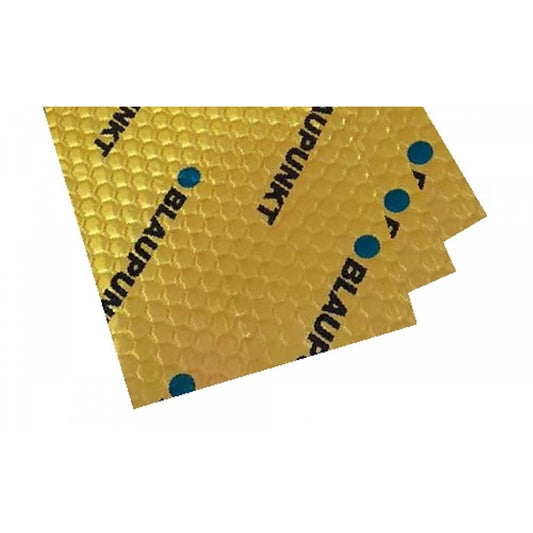
Blaupunkt Damp 3.0 Car Damping Sheets (Set of 5) | Reduces Road Noise & Vibrations
Regular price Rs. 4,450Sale price Rs. 4,450 Regular priceUnit price perRs. 5,900Sale -
Nakamichi NZ-0119 2.2MM Car Damping Sheets (820×460MM) – Black
Regular price From Rs. 3,380Sale price From Rs. 3,380 Regular priceUnit price perRs. 3,999Sale -
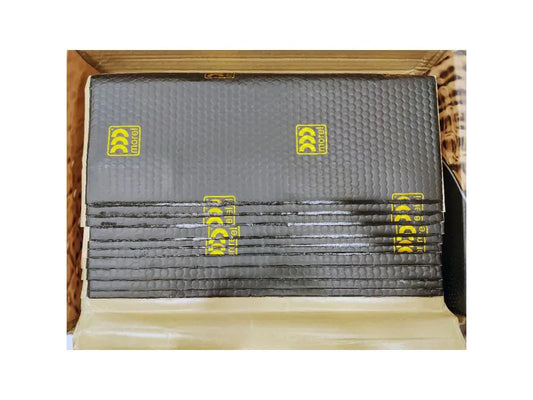
Morel ACUDAMP MAT221.10 2.1MM Damping Sheets (Pack of 10)
Regular price Rs. 8,880Sale price Rs. 8,880 Regular priceUnit price perRs. 10,990Sale -
MOCO Sound Damping Sheet DS-05 (Box of 5 Sheets) | Active Noise Cancellation
Regular price Rs. 7,880Sale price Rs. 7,880 Regular priceUnit price perRs. 9,499Sale -
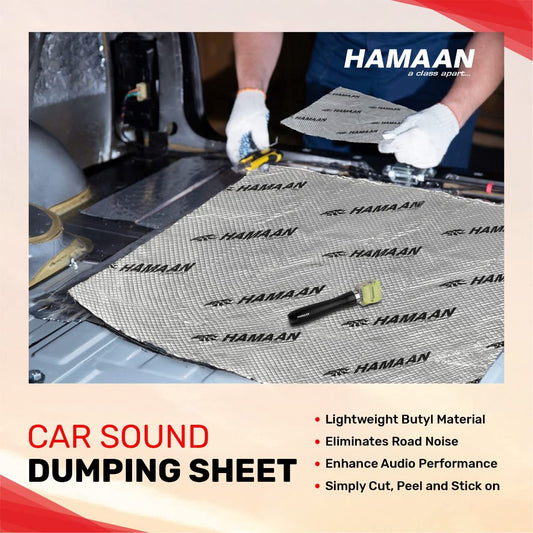
Hamaan Car Sound Deadening / Damping Sheets (500×750MM) – Pack of 5
Regular price Rs. 3,880Sale price Rs. 3,880 Regular priceUnit price perRs. 8,990Sale -
Morel ACUDAMP MAT-227.8 Damping Sheets (2.7MM) – Pack of 8
Regular price Rs. 10,980Sale price Rs. 10,980 Regular priceUnit price perRs. 14,990Sale -
Morel ACUDAMP Mat 345.5 Sound Damping Sheets (4.5MM Triple Layer) – Pack of 5
Regular price Rs. 7,890Sale price Rs. 7,890 Regular priceUnit price perRs. 9,990Sale -
YueMi G1 2.2MM Sound Damping Sheets (800×460MM) – Pack of 10
Regular price Rs. 7,280Sale price Rs. 7,280 Regular priceUnit price perRs. 12,499Sale







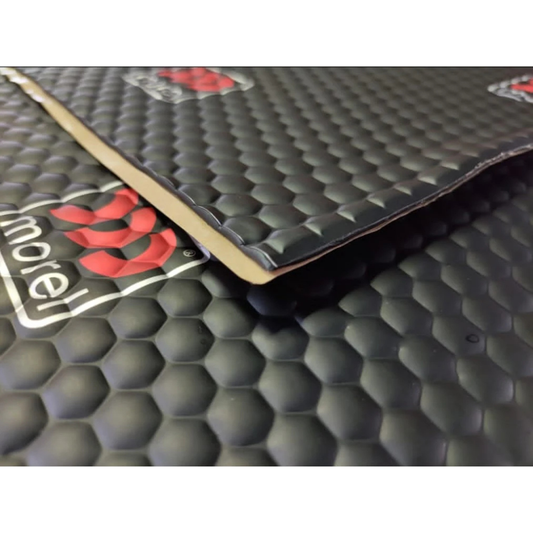



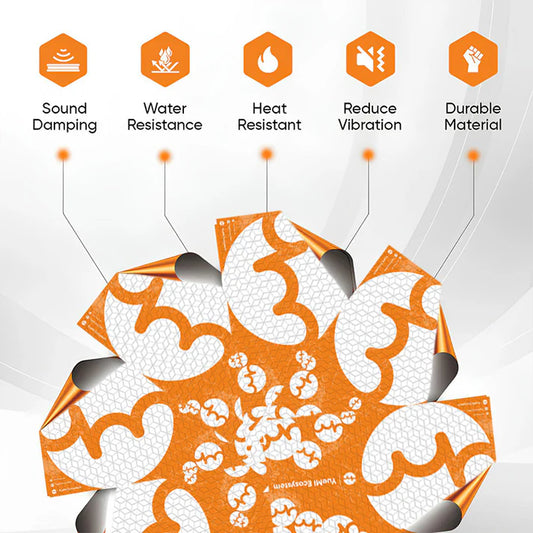
Most Indian car cabins are noisier than they need to be. Road noise from tyres, highway wind roar, panel resonance from high-powered speakers, engine noise through the firewall, and the drumming of rain on a thin metal roof are not inevitable features of driving. They are consequences of thin, uninsulated metal body panels that vibrate freely, resonate at a wide range of frequencies, and transmit every external noise directly into the cabin. A car damping sheet changes this by adding mass, rigidity, and acoustic absorption to the inner surfaces of these panels, converting them from noise-conducting drumheads into solid, non-resonant structures. At NHone, we carry 8 carefully selected car damping sheet products from multiple trusted brands, covering every thickness and pack size from an entry-level door treatment to a professional-grade high-coverage full-car installation.
What Is a Car Damping Sheet and How Does It Work?
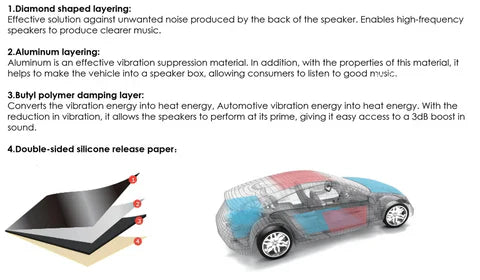
A car damping sheet, also called a sound deadening sheet or car vibration damping mat, is a self-adhesive multi-layer panel made primarily from butyl rubber bonded to an aluminium foil facing. It is pressed onto the inner metal surface of car door panels, the floor, the boot, the roof, or the bonnet after the interior trim panels are removed. The butyl rubber layer bonds permanently to the metal surface and increases the total mass of the panel, which raises its resonant frequency and reduces its tendency to vibrate at audible frequencies.
How the material works acoustically:
-
Butyl rubber is a high-density, high-damping material that converts the mechanical energy of panel vibration into a small amount of heat rather than allowing it to continue as sound
-
The aluminium foil layer on the outer surface reflects incoming heat and provides structural rigidity that prevents the panel from flexing under vibration
-
The combined mass and damping of the sheet changes the panel's resonant frequency, which reduces the amplitude of the vibrations the panel produces when excited by road input, tyre noise, or speaker output
-
Applied across a large enough area of a panel, the sheet effectively silences the panel's contribution to cabin noise and eliminates the hollow, drum-like resonance that makes car cabins feel cheap
Why Thin Metal Panels Are the Enemy of Both Quiet and Good Sound
The specific acoustic problem that car damping sheets solve is driven by the manufacturing economics of modern car production. Car body panels are pressed from steel sheets typically between 0.65mm and 0.8mm thick. At these thicknesses, the panels are lightweight and formable but acoustically thin, meaning they vibrate easily and over a broad frequency range when excited by the road surface, wind pressure, or speaker output.
The consequences of untreated thin panels are experienced in two distinct ways:
In terms of cabin noise:
-
Tyre noise from the road surface excites the floor pan and wheel arch panels, which vibrate and transmit this as broadband noise into the cabin
-
Wind at highway speeds creates pressure fluctuations against the door panels that produce buffeting and low-frequency drone
-
Rain on the roof creates a drumming sound as each drop excites the large, flat roof panel
In terms of audio quality:
-
Door speakers mounted in untreated door panels fire into a cavity that resonates and colours the sound, producing boomy, inaccurate bass response
-
The door panel itself vibrates in response to bass output from the speaker, creating a hollow, distorted mid-bass
-
Speaker energy escapes to the other side of the door panel rather than being directed inward toward the listener, wasting output and reducing efficiency
Both problems have the same solution: adding a car vibration damping layer to the panel surface. A treated door produces noticeably quieter road noise transmission and noticeably more accurate, cleaner speaker output simultaneously.
Where to Apply Car Damping Sheets for Maximum Effect
A car acoustic sheet treatment delivers different results depending on which panel area it is applied to. Understanding which zone addresses which specific noise or audio problem allows you to prioritise your treatment and achieve the most audible improvement with the coverage you purchase.
Car Door Damping Sheet
The front door panels are the highest-priority treatment zone for any driver who has upgraded to aftermarket speakers or who experiences significant wind and road noise through the door cavity. A car door damping sheet treatment applied to the inner metal skin of the door and to the inner door panel creates a sealed, mass-loaded speaker enclosure that dramatically improves mid-bass accuracy, removes the hollow resonance from the door cavity, and reduces the wind noise that penetrates through door seals at highway speed.
What treating the door achieves:
-
Bass from door-mounted speakers becomes tighter, more controlled, and more accurately reproduced
-
Mid-bass distortion and panel resonance are eliminated or greatly reduced
-
Highway wind intrusion through the door gap is reduced measurably
-
The door itself sounds more solid and premium when closed
Boot and Wheel Arch Treatment
The boot floor and rear wheel arch panels transmit tyre noise and subwoofer vibration directly into the rear cabin area. A car noise reduction mat applied to the boot floor and wheel arch inner surface reduces tyre drone in the rear cabin and controls the structural vibration generated by high-power subwoofers, preventing the buzzing and rattling of boot trim panels under bass output.
Floor and Firewall Treatment
The floor pan and firewall are the primary entry points for engine noise, exhaust drone, and mechanical noise from the drivetrain and transmission. A car insulation sheet applied to the floor pan significantly reduces the road and exhaust noise that enters the cabin from below, and firewall treatment reduces engine noise transmission for a noticeably quieter urban drive.
Roof and Ceiling
The roof panel is the largest single flat surface on any car and one of the most acoustically active, producing significant noise under rain and resonating at low frequencies during highway driving. Roof treatment with a car damping sheet produces the most dramatic reduction in rain drumming and one of the most noticeable improvements in overall cabin quietness.
Bonnet Damping Sheet
A bonnet damping sheet or car bonnet damping sheet is applied to the inner surface of the engine bonnet to contain high-frequency engine noise within the engine bay and to reduce the heat and sound that transfers from the engine through the bonnet to the cabin above. Car bonnet damping sheet treatment is particularly effective on naturally aspirated and turbo-petrol engines that produce strong high-frequency intake and exhaust harmonics at idle and under load.
Thickness and Construction: What the Numbers Mean
The thickness of a car damping sheet determines both its acoustic performance and its weight, and the construction determines what kinds of noise and vibration it addresses most effectively. Understanding these specifications helps you choose the right product for your specific application.
2.0mm to 2.2mm single layer sheets are the most widely used format for general-purpose door, floor, and boot treatment. They provide a good balance of acoustic damping performance and manageable weight addition per panel, making them the right starting point for most drivers who want to reduce road noise and improve speaker performance. Several products in our collection fall in this thickness range with pack sizes of 5 and 10 sheets for partial or full-car coverage.
2.7mm dual-layer sheets provide greater mass per unit area than 2.1mm or 2.2mm sheets, which improves damping performance particularly at lower frequencies where heavier panel mass is required to control resonance. These are the professional-grade choice for complete door treatments and high-output audio installations where the speaker is generating significant bass energy. A pack of 8 sheets in this thickness covers a thorough door treatment plus partial floor coverage.
4.5mm triple-layer sheets represent the highest specification in our collection, combining three separate damping layers in a single panel for the maximum acoustic mass and the most comprehensive vibration control available in the civilian car audio market. This format suits extreme audio builds, performance-focused installations with very high-powered subwoofers, and complete quiet cabin treatments where every application zone is covered simultaneously. Currently sold out.
How to Install Car Damping Sheets
Every car damping sheet in our collection uses a self-adhesive butyl rubber backing that bonds directly to clean bare metal without any additional adhesive, heat gun, or specialist tools. The installation process follows the same sequence regardless of which panel zone is being treated.
Step-by-step installation process:
-
Remove the relevant interior trim panels: For door treatment, remove the door card using a panel removal tool. For floor and firewall treatment, remove the carpet and floor insulation layer
-
Clean the metal surface thoroughly: Wipe the metal panel with isopropyl alcohol to remove any factory wax, oil, underseal residue, or surface contamination. The adhesive must bond to bare clean metal
-
Plan the coverage area: Before cutting any sheets, measure the panel area and plan how to cover the maximum surface area with the sheets available, including the flat inner skin and the cavity areas
-
Cut sheets to shape: Use a utility knife or heavy scissors to cut the sheets to size. The butyl material is flexible and can be scored and folded around curves
-
Peel and press: Remove the release liner from the adhesive backing and press the sheet firmly onto the panel surface, working out any air bubbles from the centre to the edges
-
Roll firmly: Use a rubber roller or the back of a spoon to press the sheet firmly across its entire surface, ensuring complete adhesive contact particularly at the edges
-
Reassemble the trim: Replace the interior panels once all sheets are applied and allowed to set
How Much Coverage Do You Need?
The right pack size depends on which zones you intend to treat and how thoroughly you want to cover each panel. Use these guidelines to estimate your coverage requirement before purchasing.
General coverage estimates per vehicle zone:
-
Full front door treatment (both doors, inner skin and cavity): 3 to 5 sheets at 820x460mm or similar dimensions
-
Full rear door treatment (both doors): 2 to 4 sheets depending on rear door size
-
Full floor treatment (front and rear footwells): 5 to 8 sheets depending on car size
-
Full boot floor and wheel arches: 3 to 5 sheets
-
Roof panel: 4 to 6 sheets for a standard hatchback or sedan roof
-
Bonnet/hood inner surface: 2 to 4 sheets
For a complete multi-zone treatment covering doors, floor, and boot, a pack of 10 sheets at 2.2mm thickness is a practical starting point. For a focused door-only treatment prioritising audio performance, a pack of 5 sheets at 2.7mm provides a thorough single-zone coverage with premium damping performance.
Customer Queries Regarding Car Damping Sheet
Q: What is a car damping sheet and why do I need one?
A car damping sheet is a self-adhesive butyl rubber and aluminium layer that is applied to the inner metal surfaces of car door panels, the floor, the boot, the bonnet, or the roof to reduce panel vibration and the road, wind, and engine noise that uninsulated thin metal panels allow into the cabin. It improves both cabin quietness and audio system performance simultaneously.
Q: What is the best application zone for a first car damping sheet treatment?
The front door panels are the highest-priority zone for most drivers. A car door damping sheet treatment improves speaker performance immediately by creating a sealed, mass-loaded enclosure, while also reducing highway wind noise through the door cavity. For drivers who are not focused on audio, the floor pan treatment has the most impact on tyre and road noise reduction.
Q: What is the difference between a 2.1mm sheet and a 2.7mm sheet?
A 2.7mm sheet provides more damping mass per unit area than a 2.1mm sheet, which improves performance at lower frequencies where heavier panel mass is required to control resonance. For high-output audio installations with powerful subwoofers, or for thorough professional-grade door treatments, 2.7mm delivers noticeably better control of panel resonance compared to thinner options.
Q: Can I install car damping sheets myself?
Yes. All sheets in our collection use self-adhesive butyl rubber backings and can be cut with scissors or a utility knife. The installation requires removing the door card or interior trim panel, cleaning the metal surface, and pressing the sheet firmly onto the bare metal. A rubber roller significantly improves adhesion quality across the full sheet area.
Q: What is a bonnet damping sheet and what does it do?
A car bonnet damping sheet or bonnet damping sheet is applied to the inner surface of the engine bonnet to reduce high-frequency engine noise transmission into the cabin and to slow heat transfer from the engine bay through the bonnet. It is particularly effective on petrol engines that produce significant intake and exhaust noise at idle and under load.
Q: How many sheets does it take to treat all four doors?
On average, one to two sheets at 820x460mm or similar dimensions are needed per door depending on the size of the door inner skin area. A pack of 5 to 8 sheets is typically sufficient to treat all four doors of a standard hatchback or sedan with good coverage on the flat inner metal skin.

