

Collection: CAR BODY COVER


-
GFX Car Body Cover for Tata Nexon | Waterproof | All-Weather Protection | Custom Fit | UV Resistant | Durable Fabric
Regular price Rs. 3,008Sale price Rs. 3,008 Regular priceUnit price perRs. 3,760Sale -
GFX Car Body Cover for Volvo S60 | Waterproof | All-Weather Protection | Custom Fit | UV Resistant | Durable Fabric
Regular price Rs. 3,357Sale price Rs. 3,357 Regular priceUnit price perRs. 3,950Sale -
GFX Car Body Cover for Hyundai i20 Gen 3 2020 Onwards | Waterproof | All-Weather Protection | Custom Fit | UV Resistant | Durable Fabric
Regular price Rs. 3,008Sale price Rs. 3,008 Regular priceUnit price perRs. 3,760Sale -
GFX Car Body Cover for Honda City Gen 5 2020 Onwards | Waterproof | All-Weather Protection | Custom Fit | UV Resistant | Durable Fabric
Regular price Rs. 3,160Sale price Rs. 3,160 Regular priceUnit price perRs. 3,950Sale -
GFX Car Body Cover for Honda Elevate 2023 Onwards | Waterproof | All-Weather Protection | Custom Fit | UV Resistant | Durable Fabric
Regular price Rs. 3,624Sale price Rs. 3,624 Regular priceUnit price perRs. 4,530Sale -
GFX Car Body Cover for Nissan Magnite 2021 & 2025 Onwards | Waterproof | All-Weather Protection | Custom Fit | UV Resistant | Durable Fabric
Regular price Rs. 3,624Sale price Rs. 3,624 Regular priceUnit price perRs. 4,530Sale -
GFX Car Body Cover for Skoda Superb | Waterproof | All-Weather Protection | Custom Fit | UV Resistant | Durable Fabric
Regular price Rs. 3,344Sale price Rs. 3,344 Regular priceUnit price perRs. 4,180Sale -
GFX Car Body Cover for Mahindra Thar Roxx | Waterproof | All-Weather Protection | Custom Fit | UV Resistant | Durable Fabric
Regular price Rs. 3,344Sale price Rs. 3,344 Regular priceUnit price perRs. 4,180Sale -
GFX Car Body Cover for Fiat Punto | Waterproof | All-Weather Protection | Custom Fit | UV Resistant | Durable Fabric
Regular price Rs. 3,040Sale price Rs. 3,040 Regular priceUnit price perRs. 3,550Sale -
GFX Car Body Cover for Kia Sonet 2020 Onwards | Water-Resistant | Breathable Material | UV & Dust Protection | Edge-to-Edge Fit
Regular price Rs. 4,180Sale price Rs. 4,180 Regular priceUnit price perRs. 4,530Sale -
GFX Car Body Cover for Tata Curvv 2024 Onwards | Waterproof | All-Weather Protection | Custom Fit | UV Resistant | Durable Fabric
Regular price Rs. 3,160Sale price Rs. 3,160 Regular priceUnit price perRs. 3,950Sale -
GFX Car Body Cover for Toyota Rumion 2023 Onwards | Waterproof | All-Weather Protection | Custom Fit | UV Resistant | Durable Fabric
Regular price Rs. 3,624Sale price Rs. 3,624 Regular priceUnit price perRs. 4,530Sale -
GFX Car Body Cover for Volkswagen Ameo 2016 Onwards | Waterproof | All-Weather Protection | Custom Fit | UV Resistant | Durable Fabric
Regular price Rs. 3,008Sale price Rs. 3,008 Regular priceUnit price perRs. 3,760Sale -
GFX Car Body Cover for Maruti Suzuki Dzire Gen 3 2017 / 2020 / 2024 Onwards | Waterproof | All-Weather Protection | Custom Fit | UV Resistant | Durable Fabric
Regular price Rs. 3,008Sale price Rs. 3,008 Regular priceUnit price perRs. 3,760Sale -
GFX Car Body Cover for Maruti Suzuki Swift Gen 2 2018 / 2024 Onwards | Waterproof | All-Weather Protection | Custom Fit | UV Resistant | Durable Fabric
Regular price Rs. 2,680Sale price Rs. 2,680 Regular priceUnit price perRs. 3,350Sale -
GFX Car Body Cover for Honda WR-V Gen 1 2017 Onwards | Waterproof | All-Weather Protection | Custom Fit | UV Resistant | Durable Fabric
Regular price Rs. 3,008Sale price Rs. 3,008 Regular priceUnit price perRs. 3,760Sale -
GFX Car Body Cover for Maruti Suzuki Brezza 2016 / 2020 / 2022 Onwards | Waterproof | All-Weather Protection | Custom Fit | UV Resistant | Durable Fabric
Regular price Rs. 3,624Sale price Rs. 3,624 Regular priceUnit price perRs. 4,530Sale -
GFX Car Body Cover for Maruti Suzuki Swift Gen 1 2005-2010 | Waterproof | All-Weather Protection | Custom Fit | UV Resistant | Durable Fabric
Regular price Rs. 2,680Sale price Rs. 2,680 Regular priceUnit price perRs. 3,350Sale -
GFX Car Body Cover for Maruti Suzuki Swift Gen 3 2011-2017 | Waterproof | All-Weather Protection | Custom Fit | UV Resistant | Durable Fabric
Regular price Rs. 2,680Sale price Rs. 2,680 Regular priceUnit price perRs. 3,350Sale -
GFX Car Body Cover for Maruti Suzuki Baleno Gen 2 2015-2021 | Waterproof | All-Weather Protection | Custom Fit | UV Resistant | Durable Fabric
Regular price Rs. 3,008Sale price Rs. 3,008 Regular priceUnit price perRs. 3,760Sale -
GFX Car Body Cover for Maruti Suzuki Wagon-R 2000-2009 | Waterproof | All-Weather Protection | Custom Fit | UV Resistant | Durable Fabric
Regular price Rs. 2,508Sale price Rs. 2,508 Regular priceUnit price perRs. 3,108Sale -
GFX Car Body Cover for Honda Amaze Gen 1 2013-2017 | Waterproof | All-Weather Protection | Custom Fit | UV Resistant | Durable Fabric
Regular price Rs. 3,008Sale price Rs. 3,008 Regular priceUnit price perRs. 3,760Sale -
GFX Car Body Cover for Maruti Suzuki S-Presso 2019 Onwards | Waterproof | All-Weather Protection | Custom Fit | UV Resistant | Durable Fabric
Regular price Rs. 2,680Sale price Rs. 2,680 Regular priceUnit price perRs. 3,350Sale -
GFX Car Body Cover for Hyundai i10 Grand Nios 2019 Onwards | Waterproof | All-Weather Protection | Custom Fit | UV Resistant | Durable Fabric
Regular price Rs. 2,680Sale price Rs. 2,680 Regular priceUnit price perRs. 3,350Sale -
GFX Car Body Cover for Maruti Suzuki Alto K-10 Gen 2 2014-2021 | Waterproof | All-Weather Protection | Custom Fit | UV Resistant | Durable Fabric
Regular price Rs. 2,508Sale price Rs. 2,508 Regular priceUnit price perRs. 3,135Sale -
GFX Car Body Cover for Maruti Suzuki Alto K-10 Gen 1 2022 Onwards | Waterproof | All-Weather Protection | Custom Fit | UV Resistant | Durable Fabric
Regular price Rs. 2,508Sale price Rs. 2,508 Regular priceUnit price perRs. 3,135Sale -
GFX Car Body Cover for Maruti Suzuki Ertiga Gen 1 2018 / 2025 Onwards | Waterproof | All-Weather Protection | Custom Fit | UV Resistant | Durable Fabric
Regular price Rs. 3,624Sale price Rs. 3,624 Regular priceUnit price perRs. 4,530Sale -
GFX Car Body Cover for Hyundai i20 Elite 2014-2018 | Waterproof | All-Weather Protection | Custom Fit | UV Resistant | Durable Fabric
Regular price Rs. 3,008Sale price Rs. 3,008 Regular priceUnit price perRs. 3,760Sale -
GFX Car Body Cover for Maruti Suzuki Alto Type-1 & Type-2 | Waterproof | All-Weather Protection | Custom Fit | UV Resistant | Durable Fabric
Regular price Rs. 2,340Sale price Rs. 2,340 Regular priceUnit price perRs. 2,925Sale -
GFX Car Body Cover for Tata Indigo Old/New/CS | Waterproof | All-Weather Protection | Custom Fit | UV Resistant | Durable Fabric
Regular price Rs. 2,840Sale price Rs. 2,840 Regular priceUnit price perRs. 3,550Sale -
GFX Car Body Cover for Maruti Suzuki Dzire Gen 2 2012-2016 | Waterproof | All-Weather Protection | Custom Fit | UV Resistant | Durable Fabric
Regular price Rs. 3,008Sale price Rs. 3,008 Regular priceUnit price perRs. 3,760Sale -
GFX Car Body Cover for Tata Sumo 1994-2012 / 2013 Onwards | Waterproof | All-Weather Protection | Custom Fit | UV Resistant | Durable Fabric
Regular price Rs. 3,624Sale price Rs. 3,624 Regular priceUnit price perRs. 4,530Sale -
GFX Car Body Cover for BMW 3 Series Gran Limousine 2020-2023 | Waterproof | All-Weather Protection | Custom Fit | UV Resistant | Durable Fabric
Regular price Rs. 4,144Sale price Rs. 4,144 Regular priceUnit price perRs. 4,875Sale -
GFX Car Body Cover for Ford Figo Old Type-I | Waterproof | All-Weather Protection | Custom Fit | UV Resistant | Durable Fabric
Regular price Rs. 2,680Sale price Rs. 2,680 Regular priceUnit price perRs. 3,350Sale -
GFX Car Body Cover for Hyundai Santa Fe 2019 Onwards | Waterproof | All-Weather Protection | Custom Fit | UV Resistant | Durable Fabric
Regular price Rs. 4,180Sale price Rs. 4,180 Regular priceUnit price perRs. 5,225Sale -
GFX Car Body Cover for Hyundai i20 2009-2012 | Waterproof | All-Weather Protection | Custom Fit | UV Resistant | Durable Fabric
Regular price Rs. 2,840Sale price Rs. 2,840 Regular priceUnit price perRs. 3,550Sale -
GFX Car Body Cover for Maruti Suzuki Estilo 2007 | Waterproof | All-Weather Protection | Custom Fit | UV Resistant | Durable Fabric
Regular price Rs. 3,008Sale price Rs. 3,008 Regular priceUnit price perRs. 3,135Sale -
GFX Car Body Cover for Maruti Suzuki Alto 800 2012-2019 | Waterproof | All-Weather Protection | Custom Fit | UV Resistant | Durable Fabric
Regular price Rs. 3,008Sale price Rs. 3,008 Regular priceUnit price perRs. 3,135Sale -
GFX Car Body Cover for Tata Safari Gen 3 2005-2016 | Waterproof | All-Weather Protection | Custom Fit | UV Resistant | Durable Fabric
Regular price Rs. 3,900Sale price Rs. 3,900 Regular priceUnit price perRs. 4,875Sale -
GFX Car Body Cover for Renault Kwid Redi-Go 2015 Onwards | Waterproof | All-Weather Protection | Custom Fit | UV Resistant | Durable Fabric
Regular price Rs. 3,020Sale price Rs. 3,020 Regular priceUnit price perRs. 3,150Sale -
GFX Car Body Cover for Mahindra Scorpio Classic 2016-2020 Onwards | Waterproof | All-Weather Protection | Custom Fit | UV Resistant | Durable Fabric
Regular price Rs. 4,180Sale price Rs. 4,180 Regular priceUnit price perRs. 5,225Sale -
GFX Car Body Cover for Audi A4 2004-2024 | Waterproof | All-Weather Protection | Custom Fit | UV Resistant | Durable Fabric
Regular price Rs. 3,553Sale price Rs. 3,553 Regular priceUnit price perRs. 4,180Sale -
GFX Car Body Cover for Skoda Kylaq 2025 Onwards | Waterproof | All-Weather Protection | Custom Fit | UV Resistant | Durable Fabric
Regular price Rs. 3,624Sale price Rs. 3,624 Regular priceUnit price perRs. 4,530Sale -
GFX Car Body Cover for Audi Q7 Gen 2 2016-2022 | Waterproof | All-Weather Protection | Custom Fit | UV Resistant | Durable Fabric
Regular price Rs. 5,057Sale price Rs. 5,057 Regular priceUnit price perRs. 5,950Sale -
GFX Car Body Cover for Mercedes-Benz S-Class | Waterproof | All-Weather Protection | Custom Fit | UV Resistant | Durable Fabric
Regular price Rs. 5,627Sale price Rs. 5,627 Regular priceUnit price perRs. 6,620Sale -
GFX Car Body Cover for Mercedes-Benz C-Class 2023 Onwards | Waterproof | All-Weather Protection | Custom Fit | UV Resistant | Durable Fabric
Regular price Rs. 4,441Sale price Rs. 4,441 Regular priceUnit price perRs. 5,225Sale -
GFX Car Body Cover for Mercedes-Benz V-Class 2008-2016 | Waterproof | All-Weather Protection | Custom Fit | UV Resistant | Durable Fabric
Regular price Rs. 5,032Sale price Rs. 5,032 Regular priceUnit price perRs. 5,920Sale -
GFX Car Body Cover for Land Rover Range Rover Vogue & Sport | Waterproof | All-Weather Protection | Custom Fit | UV Resistant | Durable Fabric
Regular price Rs. 5,032Sale price Rs. 5,032 Regular priceUnit price perRs. 5,920Sale

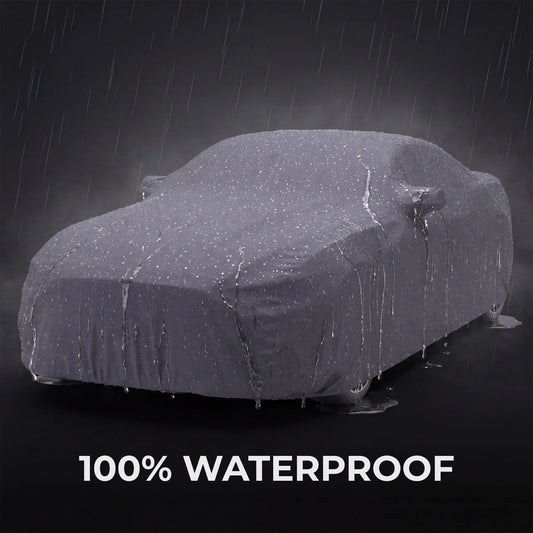

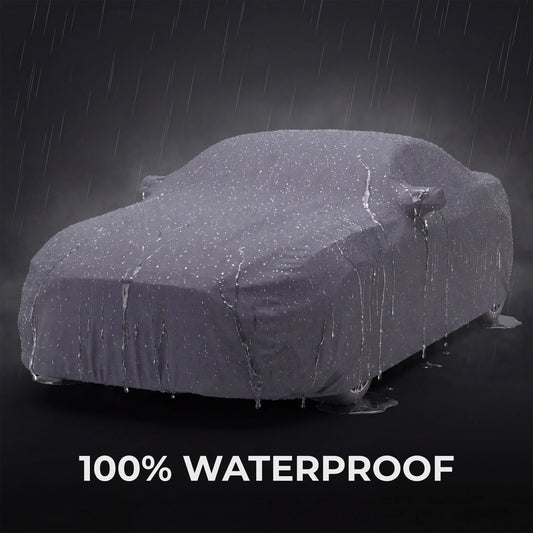

Every car parked outdoors is under constant attack. Indian summer sun fades and oxidises paint within a few seasons. Monsoon rain leaves water spots, promotes rust at panel joints, and deposits calcium and mineral residue on the clear coat. Dust and fine particulate matter from construction and traffic settle on the surface every day and act as an abrasive layer that micro-scratches the paint with every breeze. Bird droppings and tree sap etch through the clear coat within hours if left untreated. A car body cover addresses all of these threats simultaneously by wrapping the entire vehicle in a protective layer that sits between the car's exterior and everything the environment sends at it. At NHone, we carry 185 body car cover products, all in stock, covering 24 car manufacturers from budget hatchbacks to luxury SUVs. Every custom fit car cover in our collection is precision-shaped to the specific body dimensions of the listed car model and year.
Why Your Car Needs a Body Cover for Outdoor Parking
Most car owners underestimate how much cumulative damage outdoor parking causes over months and years. Paint deterioration, rust formation, and surface contamination are gradual processes that do not show their full effects until the car is several years old, at which point the damage is permanent and costly to reverse. Understanding the specific risks of Indian outdoor parking conditions explains why a car body cover waterproof solution is a practical necessity rather than an optional accessory.
Key outdoor parking risks that a car body cover prevents:
-
UV-induced paint fade: Ultraviolet radiation from direct sunlight causes the pigments in car paint to break down, producing the chalky, faded appearance that makes a car look significantly older than it is. This process accelerates in Indian summer conditions where the UV index is consistently high
-
Monsoon water damage: Repeated exposure to rain followed by sun creates a cycle of mineral deposits, water spots, and surface oxidation that gradually degrades the clear coat. Water sitting in panel gaps and joint lines promotes rust from the inside out
-
Dust abrasion: Fine particulate matter from road dust, construction activity, and agricultural burning settles on the car surface and, when disturbed by wind or wiping, acts as an abrasive that creates micro-scratches in the clear coat over time
-
Bird dropping etching: Droppings from birds are strongly acidic and begin etching through the clear coat within hours of contact in Indian summer temperatures. Removing them cleanly without surface damage requires catching them immediately, which is impossible during working hours in open parking
-
Tree sap and pollen: Organic deposits from overhead trees are sticky and acidic. They bond to the paint surface and harden in the sun, making removal without paint damage progressively more difficult the longer they are left in contact
-
Hailstorm and weather impact: Unseasonal hailstorms, a growing weather event in north Indian cities, can create dozens of dents in an unprotected car during a single storm
What Is a Car Body Cover and How Does It Work?
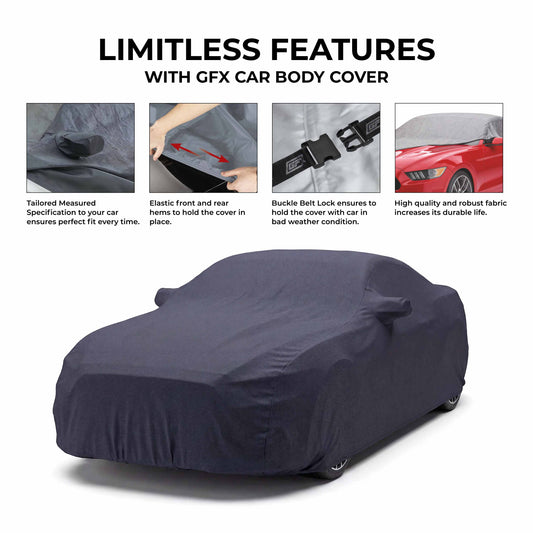
A car body cover is a full-vehicle external wrap made from protective fabric that is placed over the car when it is parked to shield the paint, glass, trim, and roof from outdoor exposure. It drapes over the complete exterior surface of the car, including the bonnet, roof, boot, doors, mirrors, and bumpers, and is secured with an elasticised hem at the front and rear plus windproof straps or buckles underneath to prevent wind from lifting or displacing the cover.
How the car exterior cover functions in each weather condition:
-
In direct sunlight: The outer layer of the cover reflects solar radiation and blocks UV from reaching the paint surface, preventing heat buildup and photo-oxidation of the paint and trim
-
In rain: The waterproof outer fabric sheds water away from the panel surface rather than allowing it to pool in gap lines and joint edges. Water runs off the cover rather than the paint
-
In dust storms or high winds: The cover contains all airborne dust and particulate matter on its own surface, which is then shaken off or wiped down during removal, before it can contact the paint or glass
-
In hailstorms: The multi-layer fabric absorbs the impact energy of small hailstones, reducing the severity of surface denting on the sheet metal panels underneath
-
When parked overnight: The soft inner lining of the cover prevents the fine accumulation of overnight dew, dust, and condensation from forming directly on the paint surface
Key Features of Our Custom Fit Car Body Covers
Every body car cover in our collection is manufactured to a consistent quality standard with the same core features confirmed across all 185 products. These are the specifications that define how the cover performs in real-world Indian outdoor parking conditions.
Key confirmed features of every car body cover in our collection:
-
Waterproof outer fabric: The outer layer is made from a waterproof polymer-blend fabric that prevents water from passing through the cover material to the paint surface underneath, handling both rain during parking and morning dew accumulation
-
All-weather protection design: The cover is engineered for use across the full range of Indian outdoor conditions, from peak summer UV exposure to monsoon downpours, winter fog and dew, and dusty dry seasons without degrading in material performance
-
Custom fit construction: Each cover is shaped to the exact body profile of the specific car model and year listed, with dedicated pockets for side-view mirrors and the correct silhouette for the car's roof height, bonnet slope, boot profile, and bumper depth
-
UV resistant material: The outer fabric layer includes UV-resistant treatment that slows the degradation of the cover material itself under prolonged sun exposure, maintaining the cover's structural integrity and protective performance across multiple seasons of outdoor use
-
Durable fabric construction: The material is rated for extended repeated use, including regular covering and uncovering cycles, without tearing at stress points, fraying at edges, or losing elasticity in the hem
Waterproof Car Body Cover: Protection Through Every Indian Season
The car body cover waterproof standard is the most important performance requirement for Indian outdoor parking conditions because India's climate subjects vehicles to extreme seasonal variations that no single type of weather protection alone can address. A cover that is waterproof during monsoon but degrades under summer UV does not provide year-round value. A cover that is UV-resistant but allows water penetration during rain leaves the paint exposed during one of the most damaging weather events of the Indian calendar.
What waterproof construction delivers across the Indian seasonal cycle:
-
Summer: Reflects radiant heat from the cover surface before it transfers to the bonnet and roof metal, keeping exterior panel temperatures noticeably lower than an uncovered vehicle parked in the same position
-
Monsoon: Prevents rain from pooling on the car surface by shedding water away from the edges of the cover. The waterproof fabric stops mineral-laden rain from leaving deposits directly on the paint, which is the primary cause of post-monsoon paint cloudiness
-
Winter: Prevents morning frost and heavy dew from sitting on glass and paint surfaces overnight. An uncovered car in December and January in north India accumulates a thin water film nightly that, over weeks, deposits mineral residue on the glass and promotes surface rusting at seals
-
Dust season: During dry spring and autumn periods when construction dust and agricultural burning are at their highest, the cover contains all settled particles on its own washable surface rather than allowing them to accumulate on the paint
UV Protection Car Cover: Preserving Your Paint and Interior
UV protection car cover performance works at two levels simultaneously: protecting the paint on the exterior surface and, because UV penetrates glass, reducing the UV load on the interior as well. A correctly fitted car cover outdoor wrap is one of the only solutions that protects both the exterior paint and the interior materials in a single product.
What UV protection from a car body cover prevents:
-
Paint oxidation: UV-A and UV-B radiation breaks down the polymer chains in automotive clear coat and base coat paint, producing the chalky, dull appearance commonly seen on cars parked outdoors for several years without paint protection
-
Colour fade: The pigments in car paint are particularly vulnerable to UV over time, causing the rich colour depth of a new car to flatten and shift toward a lighter, washed-out tone within three to five Indian summers of unprotected outdoor parking
-
Windshield delamination: UV exposure over time causes delamination at the edges of the laminated glass structure, producing the peripheral clouding seen on older cars that have been parked in open sunlight for years
-
Cabin temperature management: By blocking direct solar radiation from the glass and roof, a car parking cover significantly reduces the temperature inside the car cabin during parking, which in turn protects leather, vinyl, and plastic interior surfaces from heat-induced cracking and colour fade
Custom Fit Car Cover vs Universal Car Body Cover: Why Fitment Is Everything
The car body cover market in India is dominated at the lower end by cheap universal-size covers sold by body type category: small, medium, large, SUV. These are significantly cheaper than custom fit options but provide substantially less protection and create their own risks.
|
Feature |
Universal Car Body Cover |
Custom Fit Car Cover |
|
Fit accuracy |
Approximate, loose in some areas, tight in others |
Precision-shaped to the exact body profile of the listed model |
|
Mirror coverage |
Mirror pockets rarely align correctly |
Dedicated mirror pockets matched to the exact mirror position of each model |
|
Wind resistance |
Loose fabric sections catch wind and flap against the paint |
Snug perimeter fit with elasticised hem holds the cover securely |
|
Paint contact |
Loose fabric can move against the paint in wind, creating abrasion |
Custom fit minimises movement between cover and paint surface |
|
Water pooling |
Excess fabric pools water on horizontal surfaces |
Correct fit allows water to shed away from the edge profile |
|
Bumper coverage |
May expose lower bumpers or rear diffusers |
Shaped to include front and rear bumpers in the coverage profile |
A custom fit car cover that fits the specific model correctly provides the protection the cover material is rated for. A universal cover that does not fit correctly undermines the effectiveness of even the best fabric by leaving sections of the car exposed and allowing wind-driven movement against the paint.
Who Benefits Most from a Car Body Cover?
A car body cover benefits any driver who parks outdoors regularly, but the value is highest for specific parking situations and car ownership profiles.
Drivers and situations where a car body cover is most valuable:
-
Open apartment parking: Most Indian apartment complexes have open or partially covered parking with no protection from rain, sun, dust, or bird activity. A dustproof car cover is the only practical protection available in this environment
-
Street and roadside parking: Cars parked on public roads are exposed to vehicle exhaust particles, road dust, tree canopy, and weather without any protection. A car cover outdoor solution is the only available external protection in this situation
-
Infrequently used vehicles: A second car, a recently purchased car waiting for registration, or a seasonal-use vehicle that sits parked for days or weeks at a time benefits enormously from body cover protection because it has no regular washing to dilute the accumulation of surface contaminants
-
New car owners: The first few years are when paint protection matters most because the investment in a new car is highest and the condition of the paint has the most direct impact on resale value years later
-
Owners of older or classic cars: Maintaining the paint and body condition of an older vehicle that would be costly to respray makes cover protection a highly practical maintenance tool
-
Areas with high pollution or construction activity: Industrial areas, building sites, and high-traffic corridors generate significantly more airborne particulate matter than residential zones. A car exterior cover in these environments prevents accumulation of genuinely abrasive particles on the paint surface
How to Use and Maintain a Car Body Cover
Getting the most from a car body cover requires following the right process for fitting and removal to avoid the cover itself becoming a source of paint damage.
Fitting the cover correctly:
-
Ensure the car surface is clean and dry before covering. Placing a cover over a dirty or wet car traps the dirt and water against the paint, which causes the contamination to migrate into the clear coat over time
-
Allow the engine and exhaust to cool for at least 10 to 15 minutes after a drive before fitting the cover. Fitting a cover over a hot bonnet or exhaust accelerates material degradation at the contact points
-
Fit the cover over the car from front to back, aligning the mirror pockets with the side-view mirrors first, then draping the cover over the roof and allowing it to fall down the sides evenly
-
Secure the elasticised hem at the front and rear bumpers and fasten any windproof straps under the car before leaving the vehicle
Maintaining the cover:
-
Shake the cover free of loose dust before removing it from the car to prevent dragging abrasive particles across the paint during removal
-
Clean the cover periodically by spreading it flat and rinsing with clean water. For stubborn marks, wipe with a soft cloth. Avoid harsh chemical detergents
-
Store the cover folded in the storage bag provided when not in use to prevent it from accumulating dust or developing mould in humid conditions
-
Inspect the inner lining regularly for any debris or sharp particles that may have accumulated and remove before re-fitting on the car
Customer Queries Regarding Car Body Cover
Q: What is a car body cover and what does it protect against?
A car body cover is a full-vehicle external wrap that covers the complete exterior of a parked car to protect it from sun, rain, dust, bird droppings, tree sap, and other outdoor elements. Key protections include UV-resistant fabric that prevents paint fade, waterproof material that sheds rain away from the panel surface, and a soft inner lining that prevents abrasion of the clear coat.
Q: What is the difference between a waterproof car body cover and a dustproof cover?
A car body cover waterproof is designed for outdoor parking in all weather conditions, with a waterproof outer layer that prevents rain from penetrating to the car surface. A dustproof car cover is designed for indoor garage or covered parking use where rain is not a concern, using a lighter, softer fabric focused on preventing dust accumulation. Every cover in our collection is the all-weather waterproof type suitable for outdoor parking.
Q: Is a custom fit car cover better than a universal size cover?
Yes, significantly. A custom fit car cover is shaped to the exact body profile of the specific car model listed, ensuring the mirror pockets align correctly, the bumpers are fully covered, the hem fits snugly at the correct height, and the cover does not flap against the paint in wind. A universal cover provides approximate coverage with loose sections that may expose areas of the car and create wind-driven movement against the paint.
Q: How do I clean a car body cover?
Shake loose dust from the cover before removing it from the car. Spread the cover flat on a clean surface and rinse with clean water from a garden hose or tap. For stubborn marks, wipe with a soft damp cloth. Avoid using washing machines, high-pressure washers, or harsh chemical detergents. Allow the cover to dry completely before storing or re-fitting.
Q: Can I put a car body cover on immediately after driving?
No. Allow the engine and exhaust to cool for at least 10 to 15 minutes after parking before fitting the cover. Fitting a cover over a hot bonnet, roof, or exhaust system accelerates wear at those contact points and can cause the cover material to degrade more quickly in those areas.
Q: How do I choose the right car body cover for my vehicle?
Use the Car Brand and Car Model filter on this page to navigate to the cover listed specifically for your car model and year. Every cover in our collection is custom-shaped for the specific car model it is listed for, not a generic size category. Confirm your exact model name and year range before purchasing to ensure the mirror pockets, bumper coverage, and hem fit your car correctly.

