

Collection: Car Led Headlight Bulbs


-
OSRAM LED Headlight for Car | H4 / H19 | 12V 80W | Cool White 6000K | High-Brightness LED Bulbs
Regular price Rs. 5,360.00Sale price Rs. 5,360.00 Regular priceUnit price perRs. 11,990.00Sale -

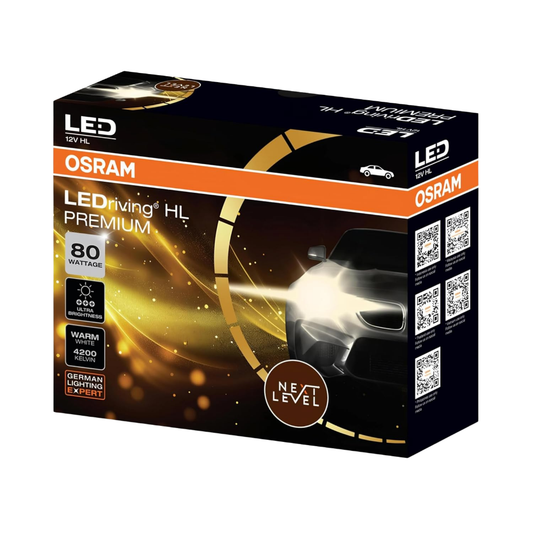
OSRAM LED Headlight for Car | H8 / H11 / H16 | 12V 80W | Cool White 6000K | High-Brightness LED Bulb
Regular price Rs. 5,280.00Sale price Rs. 5,280.00 Regular priceUnit price perRs. 10,990.00Sale -
OSRAM LED Headlight for Car | HB3 / 9005 | 12V 80W | Cool White 6000K | High-Brightness LED Bulbs
Regular price Rs. 5,280.00Sale price Rs. 5,280.00 Regular priceUnit price perRs. 10,990.00Sale -
OSRAM LED Headlight for Car | 9012 / HIR2 | 12V 80W | Cool White 6000K | High-Brightness LED Bulbs
Regular price Rs. 5,280.00Sale price Rs. 5,280.00 Regular priceUnit price perRs. 10,990.00Sale -
OSRAM LED Headlight for Car | H1 | 12V 80W | Cool White 6000K | High-Brightness LED Bulbs
Regular price Rs. 5,280.00Sale price Rs. 5,280.00 Regular priceUnit price perRs. 10,990.00Sale -
OSRAM LED Headlight for Car | H7 / H18 | 12V 80W | Cool White 6000K | High-Brightness LED Bulbs
Regular price Rs. 5,280.00Sale price Rs. 5,280.00 Regular priceUnit price perRs. 10,990.00Sale -
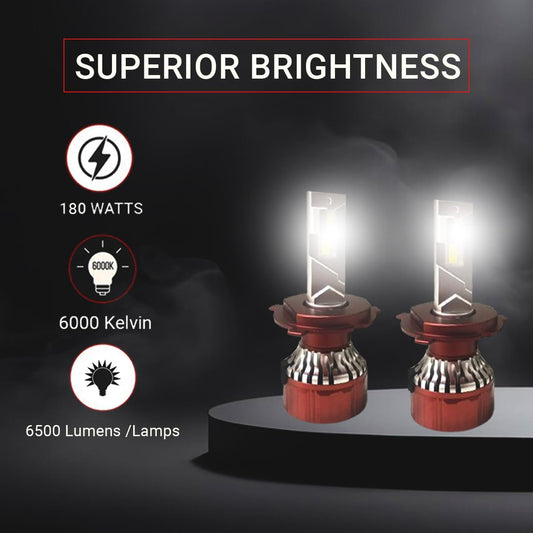
Blaupunkt Car LED 12X Pro HP Headlight | H4 / H19 | 180W | 6000K | 6500 Lumens | Velocity Power | 2-Year Warranty
Regular price Rs. 6,280.00Sale price Rs. 6,280.00 Regular priceUnit price perRs. 10,990.00Sale -
Blaupunkt Car LED 12X Pro HP Headlight | H7 / H18 | 180W | 6000K | 6500 Lumens | Velocity Power | 2-Year Warranty
Regular price Rs. 5,920.00Sale price Rs. 5,920.00 Regular priceUnit price perRs. 10,990.00Sale -
Blaupunkt Car LED 12X Pro HP Headlight | 9005 / 9012 | 180W | 6000K | 6500 Lumens | Velocity Power | 2-Year Warranty
Regular price Rs. 5,920.00Sale price Rs. 5,920.00 Regular priceUnit price perRs. 10,990.00Sale -
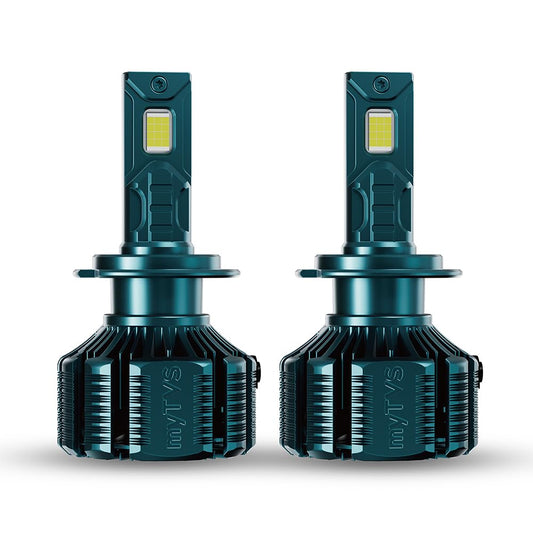
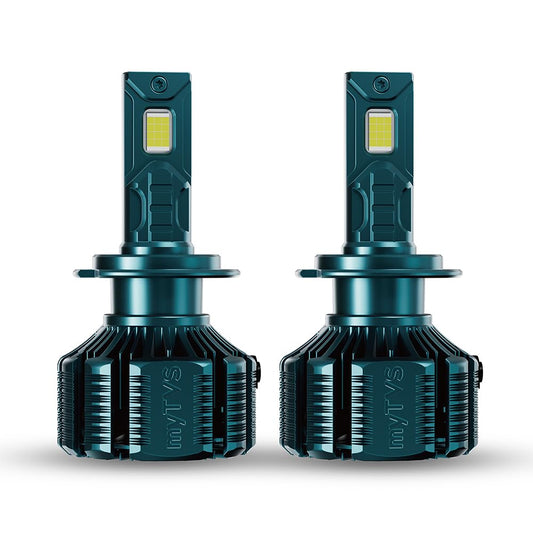
myTVS 200W LED Car Headlight Bulbs | H1 | 20000 Lumens | 6000K Cool White | Plug & Play | 2-Year Warranty
Regular price Rs. 6,280.00Sale price Rs. 6,280.00 Regular priceUnit price perRs. 14,490.00Sale -
myTVS 200W LED Car Headlight Bulbs | 9005 / HB3 | 20000 Lumens | 6000K Cool White | Plug & Play | 2-Year Warranty
Regular price Rs. 6,680.00Sale price Rs. 6,680.00 Regular priceUnit price perRs. 14,990.00Sale -
myTVS 200W LED Car Headlight Bulbs | HB4 | 20000 Lumens | 6000K Cool White | Plug & Play | 2-Year Warranty
Regular price Rs. 6,280.00Sale price Rs. 6,280.00 Regular priceUnit price perRs. 14,490.00Sale -
myTVS 200W LED Car Headlight Bulbs | H7 / H18 | 20000 Lumens | 6000K Cool White | Plug & Play | 2-Year Warranty
Regular price Rs. 6,280.00Sale price Rs. 6,280.00 Regular priceUnit price perRs. 14,490.00Sale -
myTVS 200W LED Car Headlight Bulbs | H8 / H16 | 20000 Lumens | 6000K Cool White | Plug & Play | 2-Year Warranty
Regular price Rs. 6,280.00Sale price Rs. 6,280.00 Regular priceUnit price perRs. 14,490.00Sale -
myTVS 200W LED Car Headlight Bulbs | HB12 | 20000 Lumens | 6000K Cool White | Plug & Play | 2-Year Warranty
Regular price Rs. 6,280.00Sale price Rs. 6,280.00 Regular priceUnit price perRs. 14,490.00Sale -
myTVS 200W LED Car Headlight Bulbs | H4 / H19 | 20000 Lumens | 6000K Cool White | Plug & Play | 2-Year Warranty
Regular price Rs. 6,680.00Sale price Rs. 6,680.00 Regular priceUnit price perRs. 14,990.00Sale -
myTVS 200W LED Car Headlight Bulbs | H27 | 20000 Lumens | 6000K Cool White | Plug & Play | 2-Year Warranty
Regular price Rs. 6,280.00Sale price Rs. 6,280.00 Regular priceUnit price perRs. 14,490.00Sale -
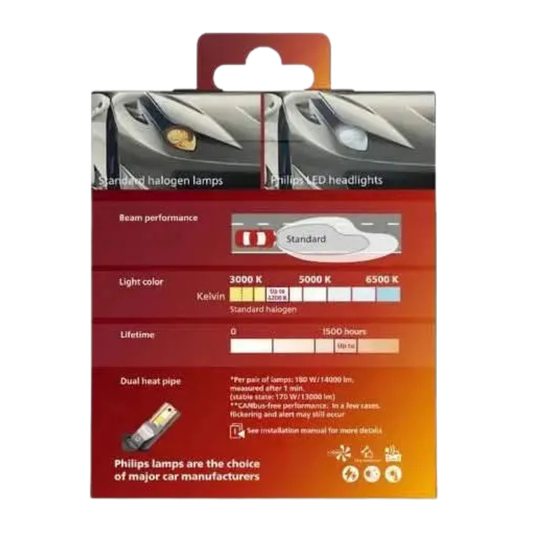
Philips U359N LED Headlight Bulbs | 180W Power | Brilliant White Light | Superior Night Visibility
Regular price From Rs. 6,400.00Sale price From Rs. 6,400.00 Regular priceUnit price perRs. 7,990.00Sale -
NH ONE LED Headlight Bulb H4/H19 300W Pro Vision
Regular price Rs. 4,262.00Sale price Rs. 4,262.00 Regular priceUnit price perRs. 8,999.00Sale -
NH ONE LED Headlight Bulb 9005/HB3 350W Pro Vision
Regular price Rs. 4,610.00Sale price Rs. 4,610.00 Regular priceUnit price perRs. 9,499.00Sale -
NH ONE LED Headlight Bulb H7/H18 350W Pro Vision
Regular price Rs. 4,610.00Sale price Rs. 4,610.00 Regular priceUnit price perRs. 9,499.00Sale -
NH ONE LED Headlight Bulb H1 300W Pro Vision
Regular price Rs. 4,088.00Sale price Rs. 4,088.00 Regular priceUnit price perRs. 8,999.00Sale -
NH ONE LED Headlight Bulb 9012/HIR2 200W Pro Vision
Regular price Rs. 3,740.00Sale price Rs. 3,740.00 Regular priceUnit price perRs. 7,999.00Sale -
NH ONE LED Headlight Bulb 9012/HIR2 300W Pro Vision
Regular price Rs. 4,088.00Sale price Rs. 4,088.00 Regular priceUnit price perRs. 8,999.00Sale -
NH ONE LED Headlight Bulb 9012/HIR2 350W Pro Vision
Regular price Rs. 4,610.00Sale price Rs. 4,610.00 Regular priceUnit price perRs. 9,499.00Sale -
NH ONE LED Foglamp Bulb H8/H16 200W Pro Vision
Regular price Rs. 3,740.00Sale price Rs. 3,740.00 Regular priceUnit price perRs. 7,999.00Sale -
NH ONE LED Headlight Bulb H7/H18 300W Pro Vision
Regular price Rs. 4,088.00Sale price Rs. 4,088.00 Regular priceUnit price perRs. 8,999.00Sale -
NH ONE LED Headlight Bulb 9005/HB3 300W Pro Vision
Regular price Rs. 4,088.00Sale price Rs. 4,088.00 Regular priceUnit price perRs. 8,999.00Sale -
NH ONE LED Headlight Bulb 9005/HB3 200W Pro Vision
Regular price Rs. 3,740.00Sale price Rs. 3,740.00 Regular priceUnit price perRs. 7,999.00Sale -
NH ONE LED Headlight Bulb H4 H19 350W Pro Vision | 30000 Lumens | 6000K | IP68 | Dual Beam Hi Lo | 2 Year Warranty | Made in India
Regular price Rs. 4,860.00Sale price Rs. 4,860.00 Regular priceUnit price perRs. 9,499.00Sale -
MOCO H4 Car LED Headlight 156W Pro Vision | Super Bright LED Upgrade
Regular price Rs. 5,880.00Sale price Rs. 5,880.00 Regular priceUnit price perRs. 11,990.00Sale


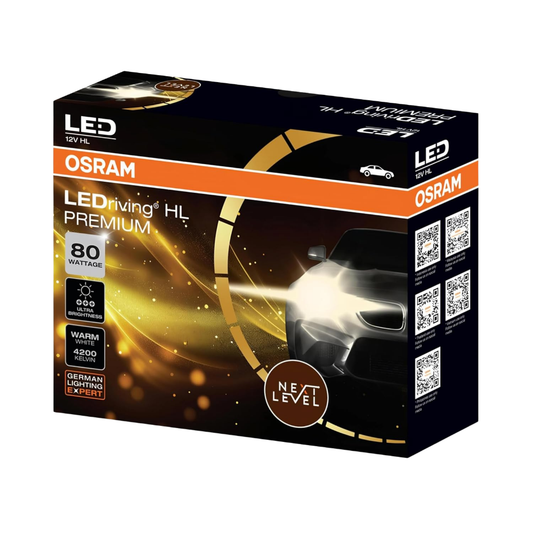


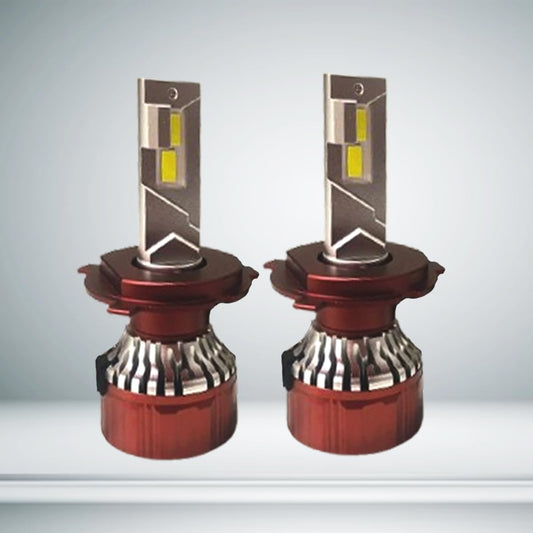

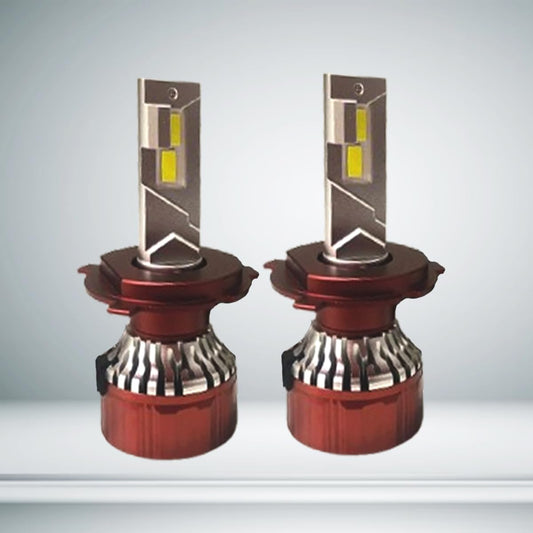









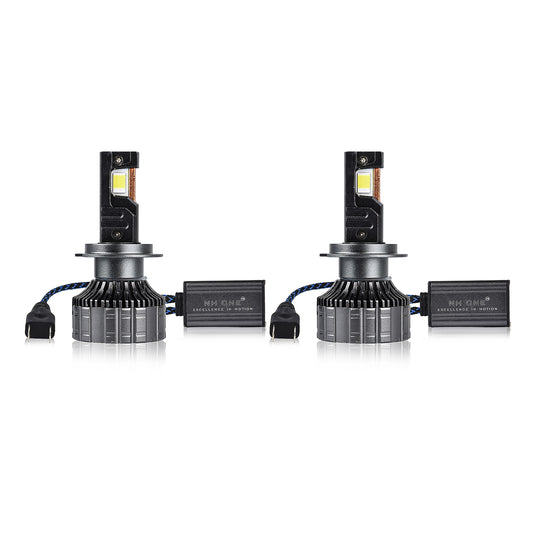


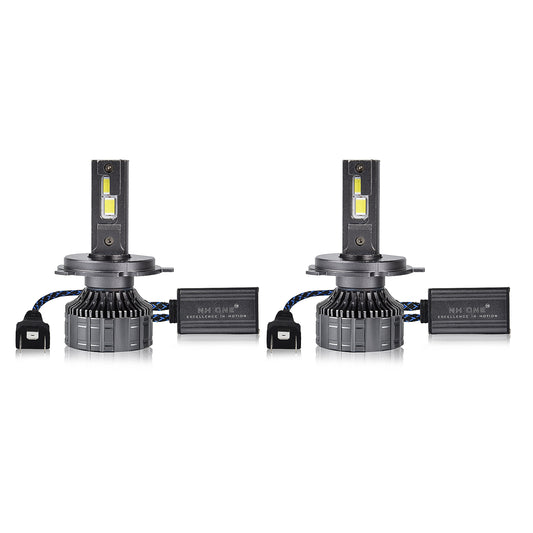

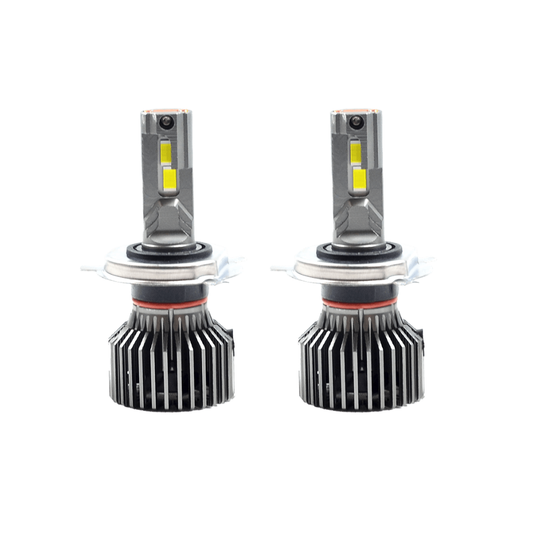
The factory halogen headlights fitted to most Indian cars are not designed for the roads you actually drive on. Dimly lit state highways, unlit village roads, blinding oncoming headlights, and late-night expressway driving all demand more than a standard halogen can deliver. Car LED headlight bulbs are the single most impactful safety upgrade available to any driver, producing significantly more light output from the same power socket, lasting many times longer than a halogen, and producing a clean cool white beam that makes the road ahead dramatically easier to read. At NHone, we carry 31 led bulbs for cars across every major fitment type, covering H4, H7, H1, H8, H11, HB3, HB4, 9012, and more, with plug-and-play installation that fits all standard Indian car headlight sockets.
Why Upgrading to LED Headlight Bulbs Is a Safety Decision
Most drivers think of a headlight upgrade as an aesthetic choice. The reality is that it is primarily a safety decision. The beam distance, the spread, and the contrast of what your headlights illuminate determine how early you see a pedestrian at the roadside, a cattle crossing, a pothole, or a vehicle stopped without rear lights. A dim yellow halogen that has been in the car for two or three years is producing a fraction of its original lumen output, and even a fresh halogen cannot match the beam quality of a quality LED bulb replacement.
Key safety and practical advantages of switching to led light bulbs car format:
-
Significantly higher light output: Premium car LED headlight bulbs in our collection produce up to 20,000 lumens per pair, compared to a standard halogen's 1,600 to 2,000 lumens per bulb
-
Crisper, longer beam throw: LEDs produce a more focused, whiter light that illuminates further ahead on the road with less scatter and glare into oncoming lanes
-
Faster illumination: An LED reaches full brightness instantly from a cold start, with no warm-up period required
-
Lower power draw: LEDs produce more light while drawing less current from the car's electrical system compared to an equivalent halogen
-
Longer lifespan: A quality led automotive bulb lasts significantly longer than a halogen, reducing the frequency and cost of replacement
-
Consistent output: LEDs maintain their brightness throughout their operating life rather than degrading gradually the way halogens do over months of use
LED vs Halogen: Understanding the Real Difference
The shift from halogen to leds for car headlights is not simply about brightness. It changes the quality, colour, and reach of the light in ways that make the road fundamentally easier to see in challenging conditions. Understanding what each technology delivers helps explain why the upgrade is worthwhile.
|
Feature |
Standard Halogen |
Car LED Headlight Bulb |
|
Light output |
1,600 to 2,000 lumens per bulb |
Up to 10,000 lumens per bulb in our collection |
|
Colour temperature |
3,200 to 3,500K (warm yellow) |
6000K cool white matching daylight |
|
Beam clarity |
Scattered, soft-edged cutoff |
Sharp, focused cutoff with clear hot spot |
|
Lifespan |
300 to 1,000 hours |
10,000 to 30,000 hours |
|
Power draw |
55W per bulb (H4) |
80W to 350W rated input with LED efficiency |
|
Installation |
Direct plug-in |
Plug and play for most fitment types |
|
Warm-up time |
Immediate at partial brightness |
Immediate at full brightness |
What 6000K cool white means in practice: The light appears similar to natural daylight at midday. This colour temperature improves contrast on the road, making road markings, signage, and obstacles easier to distinguish quickly compared to the warm yellow of a halogen.
Understanding Headlight Bulb Fitment Types
The most important step before buying any led light bulbs car upgrade is confirming the correct fitment type for your specific vehicle. Every car uses a specific bulb socket type that is determined by the headlight housing design, and an incorrect fitment will not physically connect to your car's socket. Our collection covers all major fitment types used across Indian cars.
H4/H19: The most common fitment on Indian cars. H4 is a dual-filament bulb used for both high beam and low beam functions from a single socket. One socket, one bulb, two beam positions. This is the fitment used in most Maruti Suzuki, older Hyundai, Honda, Tata, and Mahindra models with reflector headlights.
H7/H18: A single-filament bulb used in cars with separate sockets for high beam and low beam. Cars using H7 have two separate headlight sockets per side: one for low beam and one for high beam. Common in newer European and premium segment cars.
H1: A single-filament bulb used for either high beam only or as a dedicated headlight in specific older headlight housing designs. Also used in some fog lamp positions.
H8, H11, H16: Single-filament low beam bulbs used in many modern projector headlight systems. The H11 is one of the most widely used fitments on newer generation Indian cars across Hyundai, KIA, Toyota, and Mahindra models.
HB3/9005: High beam bulb used in vehicles with separate high and low beam sockets, typically in the high beam position. Common on Toyota, Honda, and some Mahindra models.
HB4/9006: Low beam bulb counterpart to the HB3 in the same dual-socket headlight systems.
9012/HIR2: A high-performance high-intensity replacement fitment used in specific headlight systems that require a higher-output single-filament bulb. Our collection carries multiple power ratings in this fitment from 200W to 350W.
H27 and HB12: Specialist fitment types for specific Indian car models covered in the myTVS range in our collection.
Always confirm your car's specific bulb fitment before ordering. The owner's manual lists the required bulb type for each headlight position, and the fitment type is also printed on the original bulb itself.
Key Specs to Understand Before Buying LED Car Headlight Bulbs
Every car LED headlight bulb listing includes several specifications. Understanding what each one means helps you compare products meaningfully rather than being misled by inflated marketing numbers.
Lumens: The Only True Measure of Brightness
Lumens is the measure of total light output from a bulb. It is the most important figure for real-world brightness comparison and should be the primary spec you use when comparing led bulbs for cars. More lumens means more light reaching the road, more distance illuminated, and better visibility in dark conditions.
Our collection covers:
-
6,500 lumens per pair at the entry of the premium range
-
Up to 20,000 lumens per pair at the highest output tier
Do not compare wattage between LED and halogen as an indicator of brightness. A 350W rated LED bulb does not consume 350W from the car's electrical system. The wattage figure on LED products in our collection is a brightness output equivalency rating, not actual power consumption.
Colour Temperature: 6000K Cool White
Every led automotive bulb in our collection is rated at 6000K colour temperature. This is the standard cool white daylight-equivalent rating that produces the sharp, clean white beam associated with premium car headlights. It is not a blue-tinted colour but a neutral, bright white that closely resembles natural daylight at noon. This colour temperature maximises contrast on the road and makes it significantly easier to spot road hazards compared to the warm yellow of a standard halogen.
Canbus LED Compatibility
A canbus LED is specifically engineered to be compatible with modern car electrical systems that use a Controller Area Network (CAN bus) for electrical component monitoring. Many cars from 2010 onwards, particularly those with European and Korean origin, use CAN bus systems that detect load on the headlight circuit. A standard LED draws less current than the halogen it replaces, which the CAN bus system can interpret as a bulb failure, triggering a warning light on the dashboard.
A canbus LED includes a resistor circuit or CANBUS decoder built into the bulb or ballast unit that mimics the correct load for the car's monitoring system, preventing false error messages. If your car shows a headlight error warning after fitting a standard LED, a canbus-specific version is the solution.
How to know if you need a canbus version:
-
Cars from 2010 onwards from most European manufacturers typically require canbus-compatible LEDs
-
Most Indian market cars from Maruti Suzuki, Tata, and Mahindra up to mid-spec trim levels do not require canbus
-
Cars with digital instrument clusters and electronic driver assistance systems are more likely to require canbus compatibility
-
Check your product listing or contact our team via WhatsApp to confirm before purchasing
High Beam and Low Beam: How Your Headlights Actually Work
Understanding the difference between high beam and low beam is important when choosing between H4 single-socket bulbs and multi-socket fitments.
Low beam (dipped headlight) is the normal driving beam used in all conditions when other traffic is present. It is aimed downward and angled to illuminate the road ahead without blinding oncoming drivers. This is the beam active during city driving, highway driving with other vehicles present, and general night use.
High beam is the maximum illumination setting used when no oncoming traffic is visible, such as on a completely dark open highway. It projects a brighter, longer-reaching beam that is aimed higher and further ahead. High beam must be switched off when approaching oncoming vehicles to avoid blinding them.
In an H4 fitment, a single bulb serves both functions using two separate filaments within the same envelope. Switching between high and low beam moves which filament is active. In H7 and HB3/HB4 systems, separate physical sockets exist for each function and each takes its own individual bulb. Understanding which socket your car uses for each function ensures you purchase the correct bulb for the correct position.
What to Expect After a Headlight Upgrade
A quality headlight upgrade to LED delivers results that are immediately and unmistakably visible from the first night drive:
-
The road ahead is illuminated further and with more detail than before
-
Road markings, reflective signs, and hazard indicators appear earlier and more clearly
-
The beam cutoff line is sharper, improving contrast between the illuminated road and the unlit sky
-
Oncoming drivers will experience less glare because a properly aligned LED with a correct beam pattern produces less scatter than a worn halogen
-
The light colour matches other modern vehicles on the road rather than appearing yellow and dim by comparison
-
The dashboard warning of a failing headlight disappears, provided the bulb is canbus compatible where required
How to Choose the Right Car LED Headlight Bulbs
With 31 products covering every major fitment type and multiple power output tiers, the right car LED headlight bulb for your vehicle comes down to three confirmations.
Confirm your fitment type: Check your car's owner manual or the existing bulb for the fitment designation. H4 covers the broadest range of Indian cars. H7 and H11 are common on newer generation cars. Confirm before ordering.
Confirm whether your car requires canbus compatibility: If your car has a digital instrument cluster, electronic headlight monitoring, or has shown headlight error warnings previously, choose a canbus-designated product. Contact our team if you are unsure.
Choose your output tier: Our collection offers 80W, 156W, 180W, 200W, 300W, and 350W rated output tiers. Higher rated output corresponds to higher lumen output and greater beam reach. For standard city and highway driving, any product in our range is a dramatic improvement over factory halogen. For frequent dark highway driving or for large vehicles where maximum beam reach is important, the 300W and 350W Pro Vision tier products deliver the strongest output.
Customer Queries Regarding Car LED Headlight Bulbs
Q: Will an LED headlight bulb fit directly into my car without any modification?
Yes. All led bulbs for cars in our collection are designed as direct plug-and-play replacements for the factory halogen bulbs in the same fitment type. The electrical connector, the base diameter, and the orientation are identical to the original bulb, allowing a direct swap with no cutting, wiring changes, or housing modification required in most cases.
Q: Why does my car show a warning light after fitting LED bulbs?
A dashboard warning after fitting LED bulbs indicates that your car's electrical system uses CAN bus monitoring and is detecting a lower electrical load than expected from the headlight circuit. The solution is a canbus LED bulb that includes a load resistor to match the factory electrical draw. Contact our team with your car model before purchasing to confirm whether canbus compatibility is required.
Q: What is the difference between 200W, 300W and 350W LED headlight bulbs?
The wattage figures on these products refer to the equivalent output rating, not the actual power consumption from your car's battery. A higher rating corresponds to a higher lumen output and a stronger, further-reaching beam. The 200W products produce strong everyday performance, 300W produces noticeably brighter output, and 350W Pro Vision products deliver the maximum brightness in our range with the longest beam reach for dark highway driving.
Q: How long do LED car headlight bulbs last compared to halogens?
A standard halogen headlight lasts between 300 and 1,000 hours of use. A quality led automotive bulb is rated for 10,000 to 30,000 hours of use, making it a genuinely long-term replacement rather than a routine consumable item.
Q: What does 6000K mean on an LED headlight bulb?
6000K refers to the colour temperature of the light output. At 6000K, the light appears as a neutral, bright white that closely resembles natural daylight. It is significantly whiter and cooler than the 3,200K warm yellow of a standard halogen, producing better contrast on the road and a more modern appearance.
Q: Are LED headlight bulbs legal in India?
Aftermarket LED headlight bulbs are widely used across India and sold as standard automotive accessories. The legality depends on whether the bulb produces a correct beam pattern that does not cause excessive glare for oncoming traffic. The products in our collection from established brands are engineered to produce the correct beam cutoff pattern for the headlight housing they are designed to fit.

