
Collection: Dashcams


-
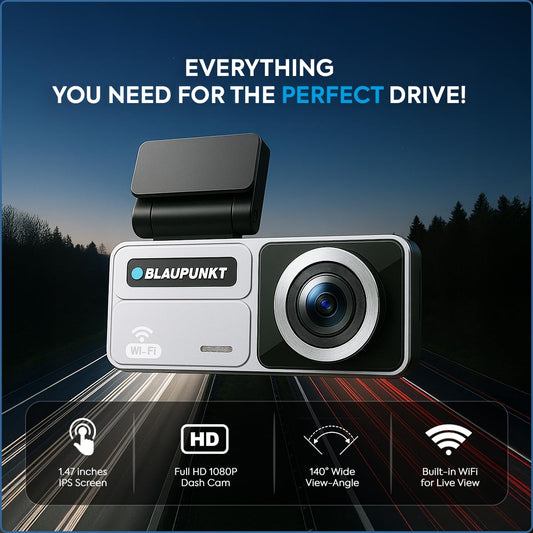
Blaupunkt 5050 Wifi Dual Dash Camera – Full HD Car Dash Camera with Dual Charging & Night Vision
Regular price Rs. 7,360Sale price Rs. 7,360 Regular priceUnit price perRs. 12,990Sale -
Blaupunkt DC 606 WiFi Dashcam for Car – Full HD 1080p, Wide-Angle, G-Sensor, Loop Recording, Parking Monitor, App Support – SD Card Not Included
Regular price Rs. 3,830Sale price Rs. 3,830 Regular priceUnit price perRs. 5,990Sale -
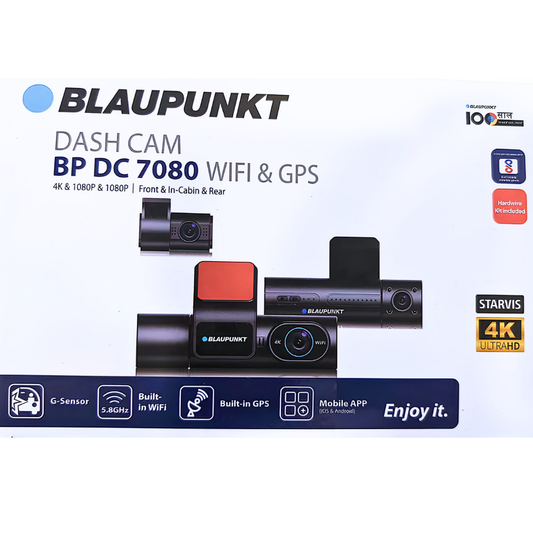
Blaupunkt BP DC 7080 Dash Camera | 4K Ultra HD Front + Dual 1080p | Triple Channel WiFi & GPS Dashcam | Sony STARVIS Sensor
Regular price Rs. 14,880Sale price Rs. 14,880 Regular priceUnit price perRs. 18,990Sale -
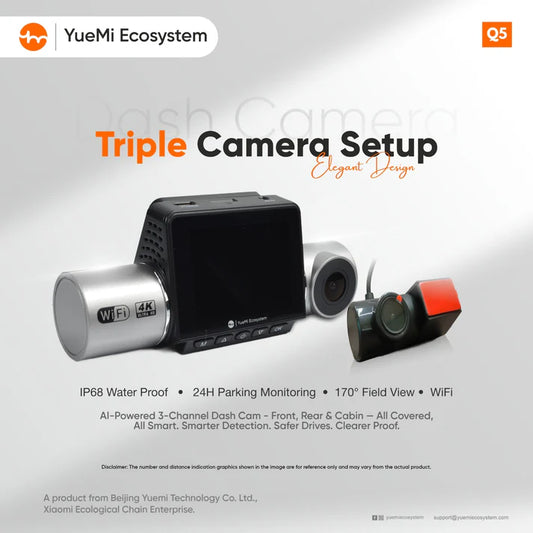
YueMi Ecosystem Q5 WiFi 3CH 4K Dash Camera with AI Control | Triple-Channel Recording | AI Control | Mobile App Connectivity
Regular price Rs. 14,880Sale price Rs. 14,880 Regular priceUnit price perRs. 27,999Sale -
Blockbuster 2CH Dash Camera | Dual Channel Recording | 2-Way Communication | Full HD 1080P | 4G SIM Compatible | 24-Hour Monitoring | GPS Track History
Regular price Rs. 9,260Sale price Rs. 9,260 Regular priceUnit price perRs. 18,990Sale -
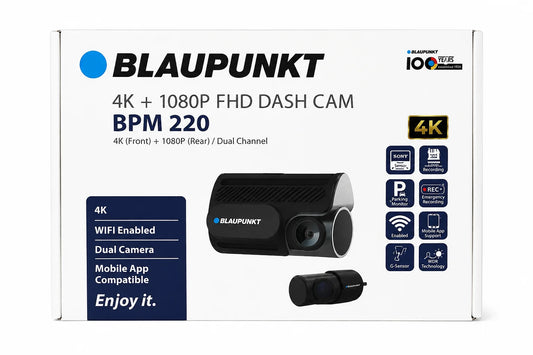
Blaupunkt BPM 220 Smartchoice Dual Channel Dash Cam | 4K Front + 1080P Rear | WiFi App Control | 24-Hour Parking Monitor
Regular price Rs. 8,660Sale price Rs. 8,660 Regular priceUnit price perRs. 14,990Sale -
Qubo Car Dashcam Pro 2.7K Dual Channel | Front + Rear Camera | GPS + Wi-Fi | Hero Group
Regular price Rs. 9,880Sale price Rs. 9,880 Regular priceUnit price perRs. 14,990Sale -
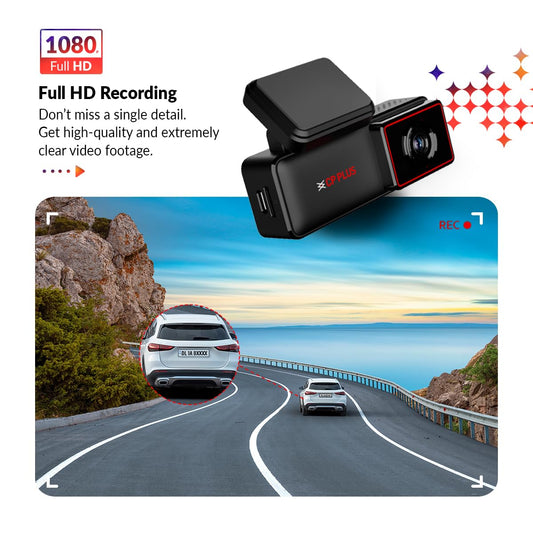
CP PLUS CarKam Car Dashcam with 1080p Full Hd Resolution | Wide View Angle | Supports G Sensor | Supports Night Vision| Suitable for Large Cars & SUVs | CP-AD-H2B-W
Regular price Rs. 3,680Sale price Rs. 3,680 Regular priceUnit price perRs. 5,690Sale -
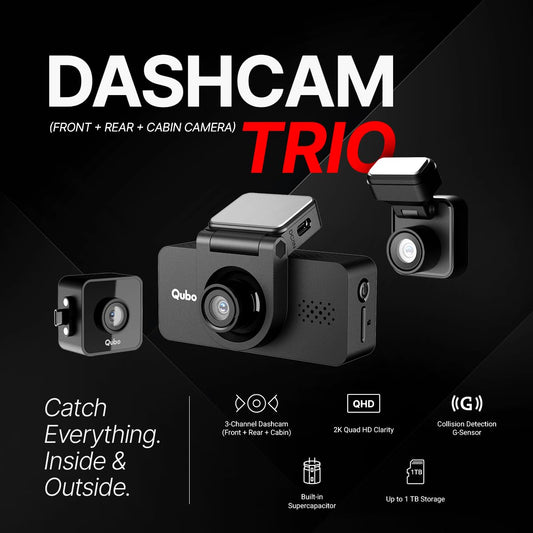
Qubo 3-Channel Dashcam Trio by Hero Group (Front + Rear + Cabin Camera) | 2K QHD | Wi-Fi + GPS
Regular price Rs. 10,880Sale price Rs. 10,880 Regular priceUnit price perRs. 19,990Sale -
Blaupunkt DASHCAM 505 WiFi Capable with 1080p 140D Wide Angle Lens Digital Video Recorder
Regular price Rs. 3,840Sale price Rs. 3,840 Regular priceUnit price perRs. 5,990Sale -


Bluzon BO-DV512 Full Touch Dashcam | Front & Rear | Full HD 1080P | Voice Recording | Loop Recording
Regular price Rs. 8,240Sale price Rs. 8,240 Regular priceUnit price perRs. 18,990Sale -
BLUZON Front Camera WiFi Dash Cam for Cars | Full HD 1080P | Wi-Fi App Connectivity
Regular price Rs. 3,380Sale price Rs. 3,380 Regular priceUnit price perRs. 6,990Sale -
Pricol Front & Rear Wi-Fi DVR Dash Cam | 3.2" LCD Display | Ultra HD 4K + 2K Recording | Wi-Fi App
Regular price Rs. 9,400Sale price Rs. 9,400 Regular priceUnit price perRs. 19,275Sale -
Pricol Front Dash Cam | Full HD 1080P Recording | Loop Recording | Wi-Fi Connectivity
Regular price Rs. 3,260Sale price Rs. 3,260 Regular priceUnit price perRs. 3,810Sale










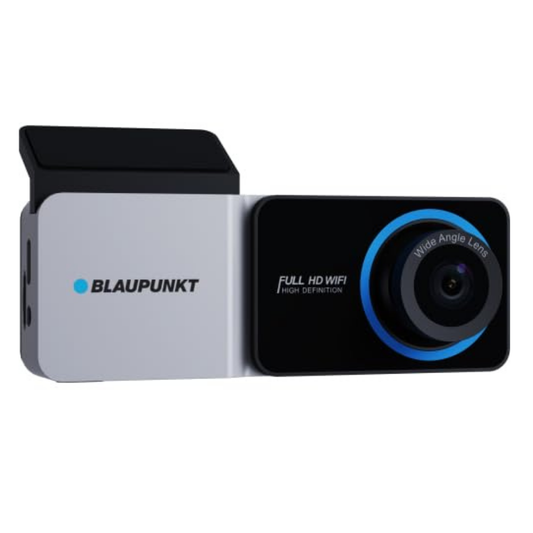


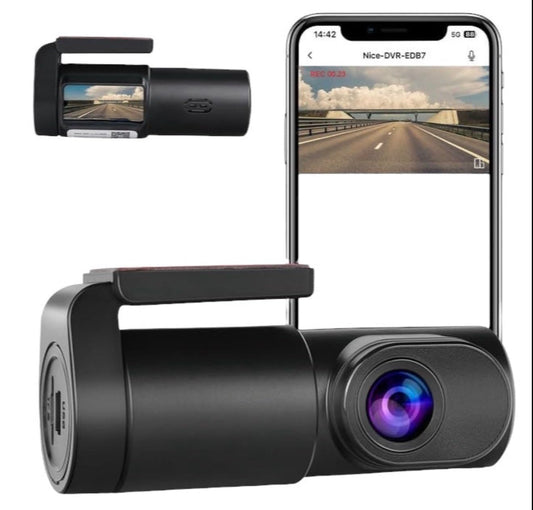

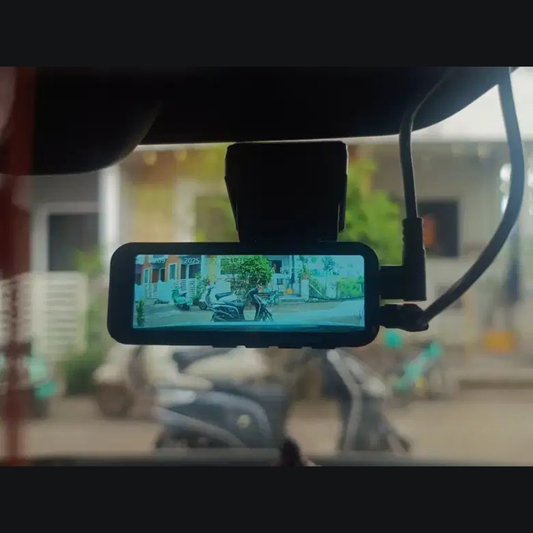


Indian roads are among the busiest and most unpredictable in the world. Accidents, near-misses, reckless overtaking, and insurance disputes are everyday realities for millions of drivers. A dashcam changes your relationship with these risks permanently. It is a compact dashboard camera mounted behind your windshield that records continuous video of the road ahead and, in multi-channel setups, the road behind and the cabin interior simultaneously. At NHone, we carry 13 carefully selected dash cam for car models from 7 trusted brands, covering every budget and recording requirement from a basic 1080p dashcam for daily commuters to a professional-grade 4K triple-channel vehicle dashboard camera with GPS and Sony STARVIS sensor for drivers who want full coverage from every angle.
What Is a Dashcam and Why Every Indian Driver Needs One
A dashcam is a purpose-built automotive camera that records continuously while you drive and stores footage on a MicroSD card using loop recording, which automatically overwrites the oldest footage when the card is full. It captures everything the road presents from the moment your ignition turns on to the moment you park. For Indian drivers, the value of a car camera dash cam extends well beyond accident documentation. It provides evidence in insurance disputes, protects against false claims, deters hit-and-run incidents in car parks, and serves as a record of road harassment or traffic violations. With parking mode dashcam technology, it even monitors your car when you are not present, recording any impact or movement detected near the vehicle.
Types of Dashcam: 1-Channel, 2-Channel and 3-Channel Compared
Choosing between a single-channel, dual-channel, and triple-channel dashcam is the most important decision in the buying process, because it determines how much of your vehicle and its surroundings is covered at any given moment. The right channel count depends on your driving environment, your use case, and how much complete evidence you want available in the event of an incident.
1-Channel Front Dashcam
A single-channel dash cam for car records the road ahead through the windshield only. It is the most affordable format and covers the most common accident scenario, which is a collision or near-miss involving a vehicle in front of or alongside your car. For daily commuters who primarily want basic road evidence and proof of fault in front-end incidents, a 1080p dashcam in the front-only configuration is a practical and cost-effective starting point. Front-only options in our collection include the Blaupunkt DC 606 WiFi with G-Sensor and parking monitor, the Blaupunkt DASHCAM 505 with 140-degree wide angle and WiFi, the Bluzon front-facing WiFi model, the CP PLUS CarKam with G-Sensor and night vision support, and the Pricol front dash cam with loop recording and Wi-Fi connectivity.
2-Channel Front and Rear Dashcam
A 2-channel vehicle dashboard camera adds a rear camera to the front unit, giving you simultaneous recording of both the road ahead and the traffic directly behind your car. This is the most widely recommended setup for Indian drivers because rear-end collisions and tailgating are among the most frequent incident types on Indian roads. The Blaupunkt 5050 WiFi Dual Dash Camera with full HD night vision and dual charging, the Bluzon BO-DV512 full touch car camera dash cam with voice recording and loop recording, the Qubo Car Dashcam Pro 2.7K with GPS and Wi-Fi from Hero Group, and the Pricol Front and Rear Wi-Fi DVR with 4K front and 2K rear recording are the dual-channel options in our current collection.
3-Channel Triple Recording Dashcam
A triple-channel dashcam adds a cabin-facing or interior camera to the front and rear setup, giving you simultaneous recording from three perspectives. This format is increasingly popular among rideshare drivers, commercial vehicle operators, families, and any driver who wants complete 360-degree documentation of both the road environment and the vehicle interior. The YueMi Q5 WiFi 3-channel 4K dash camera with AI control and mobile app connectivity, the Qubo 3-Channel Dashcam Trio with 2K QHD front, rear, and cabin cameras plus GPS and Wi-Fi, and the Blaupunkt BP DC 7080 with 4K Ultra HD front, dual 1080p rear and interior cameras, triple-channel WiFi and GPS, and a Sony STARVIS sensor are the triple-channel options in our collection. The Blaupunkt BP DC 7080 is the flagship product in this range and represents the highest specification available in our dashcam collection.
Key Dashcam Features Explained
Every dashcam listing includes a set of features that determine what it can do beyond basic recording. Understanding what each feature means ensures you choose a car safety camera that matches your actual driving needs rather than overpaying for features you will never use or missing the ones that matter most.
Loop Recording
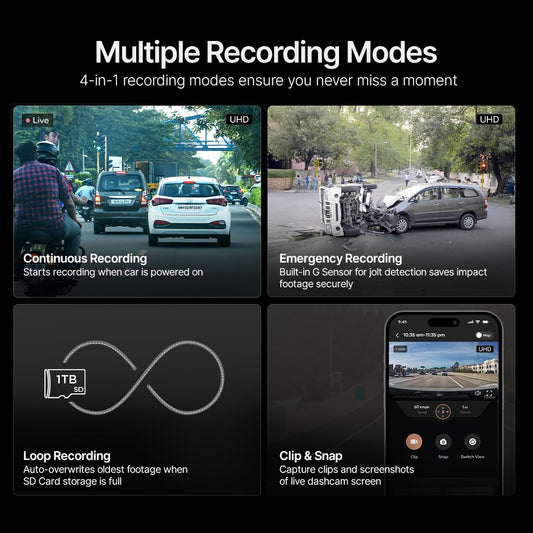
Loop recording is the foundational feature of every dashcam in our collection. It means the camera records continuously in short video segments, typically one, two, or three minutes each, and when the MicroSD card reaches capacity, it automatically overwrites the oldest segments to make space for new footage. This means the camera never stops recording and never requires you to manually delete files. Footage from incidents detected by the G-Sensor is automatically locked in a protected partition and excluded from the overwrite cycle, so emergency footage is always preserved.
Night Vision Dashcam
A night vision dashcam uses a combination of a wider aperture lens, a larger image sensor, and image processing algorithms to capture usable video in low-light conditions, including poorly lit urban roads, highways without street lighting, and the moments just before dawn and after sunset when ambient light is minimal. The Blaupunkt BP DC 7080 uses a Sony STARVIS sensor, which is one of the most respected low-light imaging sensors in the automotive camera segment, delivering clear footage in conditions where basic sensors produce grainy and unusable video.
G-Sensor and Incident Lock
The G-Sensor, also known as a gravity or accelerometer sensor, is a built-in motion detection component that measures sudden changes in velocity or direction. When the G-sensor dashcam detects an impact, a hard brake, or a sharp swerve beyond a pre-set threshold, it immediately locks the current recording segment in a protected folder on the MicroSD card that cannot be overwritten by loop recording. This ensures the footage of an accident or emergency braking event is always available when you need it, even if you are unaware that an incident occurred and days pass before you check the camera.
Parking Mode Dashcam
Parking mode dashcam functionality allows the camera to continue monitoring your vehicle after the engine is switched off and you leave the car unattended. When motion is detected near the vehicle or when the G-Sensor registers an impact while parked, the camera activates and records the event, capturing evidence of parking lot scrapes, hit-and-run incidents, and vandalism that would otherwise go completely undetected. The Blaupunkt DC 606 includes parking monitor support as standard. Activating parking mode on most dashcam models requires a hardwire kit that connects the camera directly to the vehicle's fuse box rather than the 12V cigarette lighter socket, ensuring power is available even with the ignition off.
Dashcam with GPS
A dashcam with GPS records the geographic coordinates, speed, and route data of your journey alongside the video footage, embedding this information directly into the video file as a data overlay. This GPS data serves as additional evidence in insurance claims and legal proceedings, confirming the speed of your vehicle at the moment of an incident and providing an exact location reference that matches the video timeline. The Qubo Car Dashcam Pro 2.7K, Qubo 3-Channel Dashcam Trio, Blaupunkt BP DC 7080, and Blockbuster 2CH dashcam all include built-in GPS as standard in our collection.
Wi-Fi Connectivity and App Support
Wi-Fi enabled dashboard camera for car models allow you to view live footage, download recorded video clips, and adjust camera settings directly from your smartphone without removing the MicroSD card. This is particularly useful for quickly sharing evidence footage, checking parking mode recordings, or reviewing a specific incident while still at the roadside. All Blaupunkt models, both Bluzon models, both Pricol models, and both Qubo models in our collection support Wi-Fi with a dedicated mobile application.
Resolution Guide: 1080p, 2K and 4K Dashcam Compared
Resolution determines how much detail is captured in dashcam footage and how clearly the camera reads number plates, faces, and road signs from a distance. Higher resolution footage is more demanding on the MicroSD card and requires faster cards to avoid dropped frames. For most Indian drivers, the relationship between resolution, storage demand, and price is the key consideration.
A 1080p dashcam records at Full HD resolution, which is sufficient for identifying number plates, reading road signs, and clearly documenting incident details in daylight conditions. This is the minimum recommended resolution for any dash cam for car purchased in 2025 and represents the standard across most entry and mid-level products in our collection.
2.7K resolution, available in the Qubo Car Dashcam Pro, delivers approximately 80 percent more pixel information than 1080p. The difference is most visible in the ability to zoom into frozen frames from footage and still read number plates or identify faces with greater clarity.
4K Ultra HD resolution, available in the Pricol 4K front model, the YueMi Q5, and the Blaupunkt BP DC 7080, delivers four times the pixel information of 1080p. At 4K, number plates are readable from much greater distances and in more challenging lighting conditions, which significantly increases the evidentiary value of the footage in serious incident documentation.
Brands in Our Dashcam Collection
Every brand in our dashcam collection has been selected for engineering quality, software reliability, and customer support availability in India. Blaupunkt contributes the largest range with 4 models covering 1080p single-channel, full HD dual-channel, and the flagship 4K triple-channel BP DC 7080 with Sony STARVIS sensor. Qubo, from India's Hero Group, brings 2 well-supported models including the 2.7K Dashcam Pro and the 3-Channel Dashcam Trio, both with GPS and Wi-Fi. Bluzon offers 2 options covering a basic front-facing WiFi unit and the BO-DV512 full touch dual-channel car camera dash cam with voice recording. Pricol provides 2 models with a front-only 1080p unit and a dual-channel 4K front and 2K rear setup. CP PLUS, a trusted Indian security brand, contributes the CarKam with G-Sensor and night vision. The Blockbuster 2CH is the only 4G SIM-enabled vehicle dashboard camera in our collection, supporting live cloud monitoring, 2-way communication, and GPS track history for fleet and commercial use. YueMi rounds out the range with the Q5 4K triple-channel unit with AI control and mobile app integration.
How to Choose the Right Dashcam for Your Car
With 13 products across 7 brands and three channel configurations, the right dashcam becomes clear when you answer four questions before browsing.
How many cameras do you need? For personal use with primary interest in front-facing road evidence, a single-channel front dashcam is sufficient. For complete accident documentation covering all approach angles, a dual-channel front and rear setup is the better choice. For rideshare, commercial, or family use where the cabin interior also needs to be covered, a triple-channel unit is the right format.
Do you need GPS? If your use case involves insurance claims, legal proceedings, fleet tracking, or travel documentation, choose a dashcam with GPS so that speed and location data are embedded in every recording.
What resolution suits your needs? For general daily driving evidence, 1080p is adequate. For the clearest possible number plate identification at a distance and the strongest possible evidentiary footage, choose 2.7K or 4K resolution.
Do you need parking mode? If your car is regularly parked in a public area, a housing society parking lot, or anywhere vulnerable to hit-and-run incidents, choose a dashcam with G-Sensor parking mode support and pair it with a hardwire kit for permanent power.
Customer Queries Regarding Dashcam
Q: What is a dashcam and how does it work?
A dashcam is a camera mounted on your car's windshield that records continuous video of the road while you drive. It uses loop recording to manage storage, automatically overwriting the oldest footage when the MicroSD card is full. G-Sensor technology locks footage from incidents in a protected folder so it is never overwritten.
Q: Is a dashcam useful in India?
Yes. A dash cam for car is particularly valuable in India because of the high frequency of insurance disputes, hit-and-run incidents in parking areas, and road accidents. Footage from a dashcam serves as independent, time-stamped evidence that can resolve insurance claims and legal disputes quickly and conclusively.
Q: What is the difference between a single-channel and a dual-channel dashcam?
A single-channel dashboard camera for car records only the road ahead. A dual-channel dashcam adds a rear camera to simultaneously record the traffic directly behind your vehicle. For comprehensive accident documentation covering both front and rear incidents, a dual-channel setup is strongly recommended.
Q: Does a dashcam record when the car is parked and switched off?
With parking mode activated and a hardwire kit installed, a parking mode dashcam continues to monitor the vehicle after the ignition is switched off. It activates on G-Sensor impact detection or motion detection and records the event to a protected folder on the MicroSD card.
Q: What MicroSD card should I use with a dashcam?
Always use a Class 10 or UHS Speed Class 3 (U3) high-endurance MicroSD card rated for continuous write operations. Standard MicroSD cards degrade quickly under the constant write cycles of loop recording. Cards from 32GB to 128GB are recommended depending on the number of channels and the resolution of the dashcam.
Q: What is a G-Sensor in a dashcam?
A G-sensor dashcam uses an accelerometer to detect sudden forces caused by impacts, hard braking, or sharp swerves. When triggered, it immediately locks the current recording segment in a protected folder that is excluded from the loop recording overwrite cycle, ensuring incident footage is preserved automatically even if you are unaware of the event.

