

Collection: Car Front Cameras


-
Blaupunkt DH 3.1 AHD Car Reverse Parking Camera (Bumper) with AHD Picture Quality, Pixels- 1280 x 720, 170˚Wide Angle, Water Resistant, Sensor- CMOS, Compatible with AHD(PAL) and SD(NTSC) installs
Regular price Rs. 2,320.00Sale price Rs. 2,320.00 Regular priceUnit price perRs. 3,290.00Sale -
YueMi C1 Rear AHD Camera — 1080P | 160° Wide Angle | IP68 Waterproof
Regular price Rs. 1,880.00Sale price Rs. 1,880.00 Regular priceUnit price perRs. 2,990.00Sale -
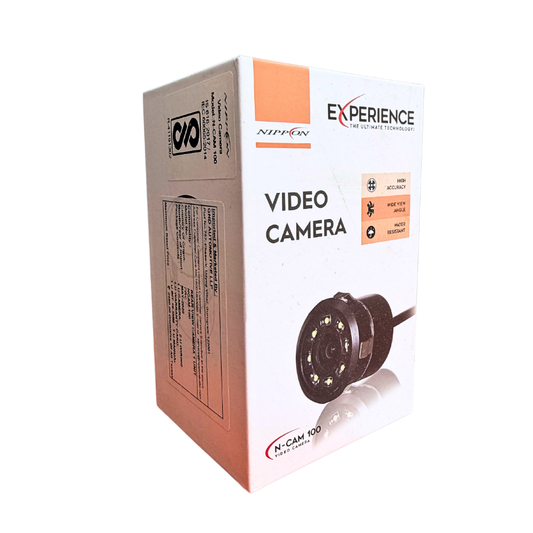
Nippon Car Rear View Reverse Parking LED Camera | Single Chip1/4 Sensor | Waterproof | Night Vision | 120 Degree Wide Angle | 10 bit Digital Video | NCAM-100
Regular price Rs. 1,790.00Sale price Rs. 1,790.00 Regular priceUnit price perRs. 2,490.00Sale -
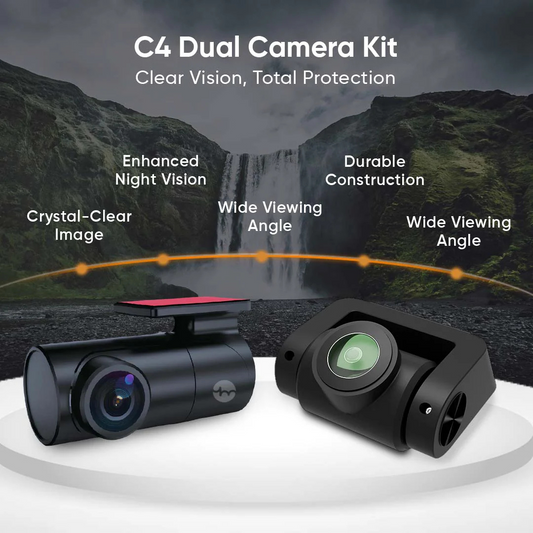
YueMi C4 1080P – Dual-Channel Front & Rear AHD Camera System
Regular price Rs. 5,220.00Sale price Rs. 5,220.00 Regular priceUnit price perRs. 6,249.00Sale



A rear camera tells you what is behind your car. A car front camera tells you what is directly in front of your bumper, which is the view that almost every driver in India is missing during forward parking manoeuvres. The area immediately ahead of the front bumper is invisible from the driver's seat in most cars, hidden behind a bonnet that sits 60 to 90 centimetres above the obstacle you are trying to avoid. High kerbs, concrete parking stops, bollards, speed breakers, and low walls all cause front bumper damage precisely because the driver cannot see them when pulling forward. A front view camera mounted in the front grille or bumper sends a real-time live feed of this blind zone directly to your head unit screen, giving you the information you need to stop at exactly the right point every time. At NHone, we carry 4 AHD camera products from Blaupunkt, YueMi, and Nippon that work as high-quality car front camera solutions, including a dedicated front and rear combo system for drivers who want complete front and rear coverage from a single purchase.
What Is a Car Front Camera and What Does It Do?
A car front camera is a compact, weatherproof camera mounted at the front of the vehicle, typically inside the front grille, on the lower bumper trim, or on the bonnet badge area. It faces forward and slightly downward to capture the road surface immediately ahead of the front bumper. The camera connects to your car's Android head unit via a video cable and displays a live wide angle front camera feed on the screen when activated.
What a car front camera shows you:
-
The road surface and obstacles in the 1 to 2 metres immediately ahead of your front bumper
-
High kerbs and parking stops that are hidden below the bonnet line
-
Bollards, pillars, and walls when pulling forward into tight parking bays
-
Ground-level debris, potholes, and speed breaker edges during slow forward movement in dark areas
-
The position of your front wheels relative to parking lines when pulling into a forward-facing bay
-
Any low obstacle your bonnet is about to drive over before your front tyres reach it
Why a Car Front Camera Matters More Than Most Drivers Realise
Most drivers invest in a rear camera first and consider their parking safety needs addressed. The front of the car is the blind spot that receives far less attention, yet it accounts for a significant proportion of parking damage on Indian roads. The reasons are specific to how Indian parking environments are designed and how most drivers park.
Common front bumper damage scenarios that a car front recording camera prevents:
-
Forward parking into wall-mounted kerbs in apartment complexes where the stop point is a concrete lip that the driver cannot see over the bonnet
-
Pulling into tight garage openings where the front grille needs to clear a pillar by a few centimetres on both sides
-
Parking in petrol station forecourts where the pump island kerb is lower than the bonnet line and invisible until the bumper touches it
-
Driving over unmarked speed breakers at night in residential colonies where the approach is not visible from the driver's eye line
-
Entering narrow lanes and exits in multi-storey parking where the driver needs to see the front corner clearance before committing to the turn
A car front camera with sensor or wide-angle camera removes all of these risks by showing the driver exactly what is in front of the bumper before contact occurs.
Key Specs to Look for in a Car Front Camera
Choosing the right car front camera from the options available requires understanding which specifications have the most direct impact on how useful the camera is in real-world use on Indian roads.
Field of view angle:
-
120° to 130°: Narrower view, less fisheye distortion, better depth perception accuracy for judging distance to an obstacle directly ahead
-
150° to 160°: Balanced wide angle showing both the road ahead and the front corners simultaneously
-
170°+: Maximum wide angle, showing the broadest possible view of the area ahead but with more edge distortion on the periphery
-
For front bumper parking assistance, 150° to 170° is the most practical range
Resolution and sensor format:
-
720P AHD: Clear and detailed enough for general front parking assistance
-
1080P AHD: Significantly sharper, with better contrast and colour accuracy in challenging light conditions
-
10-bit digital video (Nippon NCAM-100): Improved colour depth over standard 8-bit output for more accurate imaging in mixed light
-
CMOS sensor: Standard sensor type used across all cameras in our collection
Weatherproofing rating:
-
IP67: Protected against water immersion up to 1 metre for 30 minutes, sufficient for all normal Indian road and weather conditions
-
IP68: Protected against deeper water submersion, recommended for front grille mounting where the camera faces direct rain and road spray at speed
Signal compatibility:
-
AHD (Analog High Definition): Required for 720P and 1080P output on modern Android head units with AHD camera inputs
-
CVBS/SD: Standard analog output compatible with older or basic head units but limited to standard definition resolution
Car Front Camera with Recording: When You Need More Than a Live View
A standard car front camera provides a live feed while driving and during parking manoeuvres but does not record footage independently. A car front camera with recording is a front camera connected to a head unit or dashcam system that stores the video feed to a MicroSD card simultaneously with displaying the live view.
How car front recording works in an integrated setup:
-
The front camera connects to an Android head unit that supports AHD camera recording
-
The head unit records the front camera feed to its internal memory card storage alongside any other camera inputs
-
This creates a front-facing video record of the drive that can be reviewed later for documentation or evidence purposes
-
When combined with the YueMi C4 dual-channel system, both front and rear feeds are recorded simultaneously
-
The recording activates and deactivates with the ignition, with some head units supporting continuous loop recording from camera inputs
For drivers who want a dedicated car front camera recorder with standalone loop recording, a dashcam in single-channel front configuration from our dashcam collection is the purpose-built alternative.
Car Front Camera with Sensor: What the Technology Adds
A car front camera with sensor refers to cameras that include proximity sensors or image-based detection features alongside the standard wide-angle video feed. While the cameras in our current collection are primarily video-only units, understanding what sensor capability adds to a front view camera system is important for buyers planning a complete front safety setup.
What sensor-enhanced front camera systems offer:
-
Proximity alerts: Audible beeping that increases in frequency as the front bumper approaches an obstacle detected in the camera's field of view
-
Distance gridlines: Overlaid distance markers on the camera feed showing estimated distance to objects at 0.5 metre, 1 metre, and 1.5 metre intervals
-
ADAS integration: Advanced Driver Assistance System features such as lane departure warning and forward collision detection, available in select dedicated ADAS front camera units
-
Dynamic guidelines: Lines that shift with steering input to show the front wheel path as the car turns into a parking space
For ADAS front camera functionality specifically, dedicated ADAS dashcam and safety system products are the appropriate category. The cameras in our front camera collection are high-quality wide-angle AHD video units optimised for live parking view and general car front recording use.
How a Car Front Camera Connects to Your Head Unit
Connecting a car front camera to your head unit is straightforward for most aftermarket Android car stereos. The exact method depends on your head unit's input options.
Connection options and what each requires:
-
AHD camera input: Most modern Android head units include a dedicated AHD camera input. Connect the camera's AHD video cable directly to this input. This delivers 720P or 1080P quality to the screen with no signal degradation.
-
CVBS composite input: Older head units use a yellow RCA composite video input. The Blaupunkt DH 3.1 is compatible with both AHD and CVBS, making it the most broadly compatible option in our range.
-
Dual camera input: The YueMi C4 requires a head unit with at least two camera inputs, or a head unit that supports simultaneous front and rear camera feeds via a camera switcher interface.
-
Trigger wire: Most front cameras include a trigger wire that signals the head unit when to display the camera feed. This connects to a constant 12V ignition signal or to a specific speed signal if the head unit supports automatic front camera activation below a set speed.
If you are unsure which connection type your head unit supports, contact our team via WhatsApp with your head unit model and we will confirm compatibility before you purchase.
Customer Queries Regarding Car Front Camera
Q: What does a car front camera show that mirrors cannot?
A car front camera shows the road surface immediately ahead of the front bumper in real time, which is invisible from the driver's seat behind the bonnet. This includes high kerbs, parking stops, low obstacles, and the position of the front wheels relative to parking lines. Mirrors show only what is alongside and behind the car, not what is directly in front of the bumper.
Q: Can the cameras in this collection be used as a front camera or a rear camera?
Yes. All four cameras in our collection are universal AHD cameras with wide-angle lenses and waterproof housings that can be mounted at either the front or rear of the vehicle. The Blaupunkt DH 3.1, YueMi C1, and Nippon NCAM-100 are single-channel units. The YueMi C4 comes as a complete dual-channel system with one unit for front mounting and one for rear, both operating simultaneously.
Q: Does a car front camera work automatically or do I need to switch it on manually?
This depends on how the camera is connected to your head unit. Options include:
-
Manual activation: Tap the camera icon on the Android head unit touchscreen to display the front camera feed at any time
-
Automatic activation below a set speed: Some Android head units can be configured to display the front camera below a set speed such as 15 km/h
-
Trigger wire activation: The camera's trigger wire connects to an ignition signal or a smart camera switcher that activates the front feed at specific moments
Q: What is the difference between a car front camera with recording and a standard front parking camera?
A standard car front camera delivers a live feed only, with no saved video. A car front camera with recording is a front camera whose video is stored to a MicroSD card via the head unit or a connected dashcam unit. The YueMi C4 supports front recording when paired with a head unit that records AHD camera inputs.
Q: What waterproofing rating do I need for a car front camera mounted in the grille?
For external front grille mounting, an IP67 or IP68 waterproof rating is recommended. The YueMi C1 carries an IP68 rating, which is the strongest in our collection and suitable for all Indian road conditions including heavy monsoon rain and high-speed highway driving where the grille faces direct water impact.
Q: Will a car front camera work with my factory head unit?
Standard factory head units in most Indian cars do not include an AHD camera input, so the AHD cameras in our collection will not connect to them directly. An aftermarket Android head unit with a camera input is required. The Blaupunkt DH 3.1 also supports CVBS output, which is compatible with a wider range of older head units. Contact our team to confirm compatibility with your specific setup.

