

Collection: Car Phone Charger


-
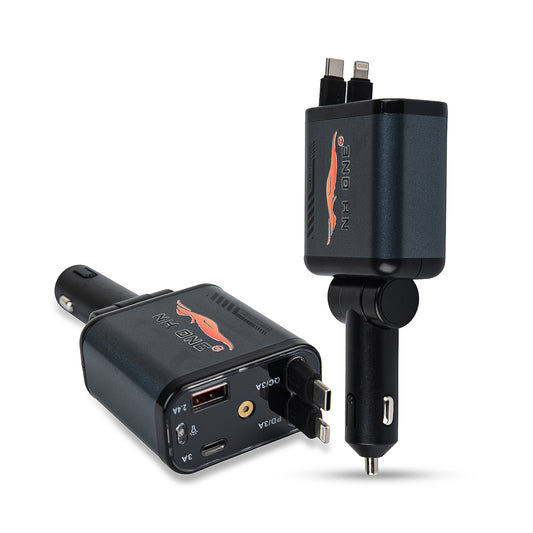
NH ONE 4-in-1 Fast Car Charger, 100W Max Output with Starlight Projector
Regular price Rs. 1,289.00Sale price Rs. 1,289.00 Regular priceUnit price perRs. 2,899.00Sale -
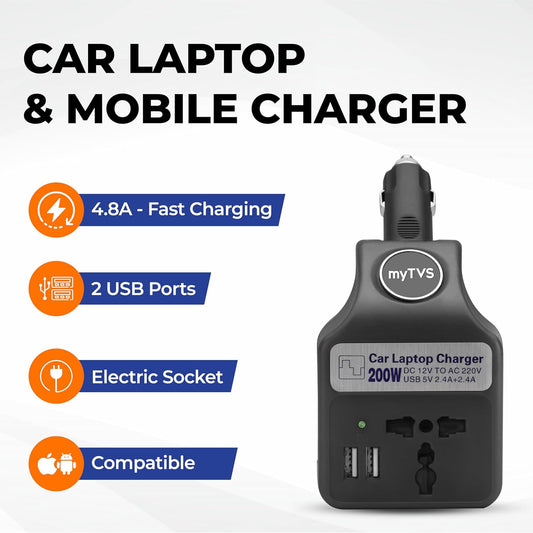
myTVS 200W Car Laptop and Mobile Charger | Power Inverter DC to AC Converter| Portable Car Charger with 2 Years Warranty| 3 in 1 Charger | Fast Charging
Regular price Rs. 2,520.00Sale price Rs. 2,520.00 Regular priceUnit price perRs. 3,299.00Sale -
Park Maxx PM-CI-381 220W Car Inverter – DC 12V to AC 220V | Fast Charging with PD & QC 3.0
Regular price Rs. 2,180.00Sale price Rs. 2,180.00 Regular priceUnit price perRs. 2,899.00Sale -
UNO Minda 12V-C USB Car Charger | 12V Input | Type-C Cable | Built-in Voltage Meter | 3.1A Total Output | Universal for All Cars
Regular price Rs. 820.00Sale price Rs. 820.00 Regular priceUnit price perRs. 1,199.00Sale -
Portronics POR-1345 Fast Charger – 33W Dual Port PD & QC3.0 Car Charger
Regular price Rs. 389.00Sale price Rs. 389.00 Regular priceUnit price perRs. 599.00Sale




A dead phone during a drive is more than an inconvenience. Navigation goes offline, calls drop, music stops, and in a roadside emergency the most important tool in the car is unavailable. The 12V power socket fitted in every car is one of its most underused features, and a good car phone charger converts it into a reliable, always-on charging point that keeps every device in the car topped up from ignition to destination. At NHone, we carry a focused selection of in-car charging solutions covering standard USB phone chargers and high-output power inverters, with options for single-device users, families with multiple devices, and drivers who need to power laptops, tablets, and other higher-wattage devices on the road.
Why a Dedicated Car Phone Charger Matters More Than It Used To
Smartphones have become the primary navigation, communication, and entertainment device for the vast majority of Indian drivers. Google Maps running continuously on a highway drive can drain a battery completely within 90 minutes. Add music streaming, Bluetooth, and the screen staying on, and most phones drop from full to low battery before a 3-hour drive is finished. A mobile phone car charger plugged into the car's 12V socket addresses this directly, but not all chargers are equal.
Why charger quality matters in a car:
-
A slow, cheap charger that outputs 5W or 10W may charge more slowly than the phone is discharging while the screen and GPS are active, meaning the battery continues falling even while plugged in
-
A fast charging car charger with QC 3.0 or PD capability pushes significantly more power to the phone at a higher voltage, keeping the battery level stable or rising even during heavy navigation and media use
-
A dual port car charger or multi-port unit allows two or more passengers to charge simultaneously without anyone needing to wait for a socket to free up
-
A car inverter goes further, converting the car's 12V DC power into standard 220V AC output, enabling laptops, portable fans, electric shavers, and other standard plug devices to operate directly in the car
Two Types of Car Charging Solutions in Our Collection
Our vehicle phone charger range covers two distinct approaches to in-car power delivery. The right choice depends on what you need to power and what your specific on-road charging situation requires.
Standard Car Phone Chargers (12V USB Socket)
A standard auto phone charger plugs directly into the car's 12V cigarette lighter or power socket and provides USB-A, USB-C, or combined port outputs for charging smartphones, earbuds, power banks, and smaller devices. These are compact, simple to install, require no external power, and are always-on whenever the car is running. Options in our collection include a 33W dual-port charger with simultaneous PD and QC 3.0 output for two fast-charging devices at once, a 12V USB charger with a built-in voltage meter that monitors the car's battery health while charging, and a 100W maximum output 4-in-1 unit with multiple port types and an ambient starlight projector for cabin lighting.
Standard car phone charger options suit:
-
Daily commuters who need one or two smartphones charged simultaneously during the drive
-
Passengers who want to charge without sharing a single charger or needing to bring their own
-
Drivers who use USB-C phones and want a PD charger that delivers faster charging than standard USB-A output
Car Power Inverters (DC to AC for Laptops and High-Wattage Devices)
A car phone charger covers smartphones. A car power inverter goes much further, converting the car's 12V DC battery output into standard 220V AC output, the same power that comes from a wall socket at home or in an office. This allows standard mains-powered devices including laptops, monitors, cameras, electric shavers, and small appliances to operate directly from the car's electrical system without needing a separate power bank or battery.
Power inverter options in our collection include a 200W DC to AC converter with fast charging ports for simultaneous laptop and mobile charging, and a 220W inverter with a built-in PD and QC 3.0 port that combines AC socket output with high-speed USB charging in a single unit.
Power inverters suit:
-
Remote workers who need to use a laptop during long highway journeys or while parked
-
Drivers covering long distances where multiple large devices need full charging from a single source
-
Professional or commercial vehicle users who need to power standard electrical equipment from the car
Charging Standards Explained: QC 3.0, PD and Fast Charging
The biggest practical difference between a basic auto cell phone charger and a fast charging one is the charging standard it uses. Understanding the three most common standards in our collection helps you match the charger to your specific phone's capability.
QC 3.0 (Qualcomm Quick Charge 3.0) is a fast charging standard developed by Qualcomm and supported by most Android smartphones built on Snapdragon processors, including devices from major Indian and global brands. A QC 3.0 car charger negotiates with the phone to deliver the highest voltage the phone can safely accept, which can charge a compatible phone up to 4 times faster than a standard 5W USB charger. Qualcomm Quick Charge 3.0 is backward compatible with QC 2.0 and standard USB, making it useful even if the phone does not support QC 3.0 specifically.
PD (USB Power Delivery) is the most versatile and highest-power fast charging standard for USB-C devices and is the standard used by iPhone 8 and later, all modern iPad models, MacBooks, and many Android phones. A PD car charger delivers power at higher wattages than QC 3.0, with common PD outputs in our collection at 20W to 30W per port, which enables even laptop charging at lower wattages. PD is particularly important for iPhone users who want the fastest possible charging from a car charger.
Wattage and output current determine the absolute maximum charging speed a charger can deliver. A 33W dual-port charger delivers a maximum of 33W split between two ports. A 100W 4-in-1 unit delivers up to 100W distributed across all active ports. When using multiple ports simultaneously, the total wattage is shared, so single-device use will typically access higher power than multi-device use from the same unit.
Single Port vs Dual Port vs Multi-Port Car Charger
Choosing the right number of ports on a vehicle phone charger depends on how many people are in the car and how many devices need simultaneous charging on a typical drive.
Single-port charger: Suits solo drivers who want the maximum available wattage directed to one device at a time. The highest wattage per port is always achievable with a single connected device.
Dual port car charger: The most practical format for couples and driver-passenger pairs who both need phones charged simultaneously. The 33W dual-port option in our collection combines a PD port and a QC 3.0 port in a single compact unit so both an iPhone and an Android device can charge at their respective optimal speeds from one charger.
Multi-port charger: A 4-port unit like the 100W 4-in-1 in our collection suits families, shared vehicles, and situations where multiple phones, a tablet, and an earbuds case need simultaneous charging. The higher total wattage output of premium multi-port chargers means that even with all ports occupied, each device still receives a meaningful charge rate.
Key Features to Look for in a Car Phone Charger
Selecting the right auto phone charger from the available options comes down to confirming these five specifications before purchase.
Total wattage output: This determines how much power the charger can deliver to all connected devices simultaneously. Higher total wattage means faster charging per device even when multiple ports are in use.
Port types and standards: Confirm that at least one port supports the fast charging standard your primary phone uses, whether PD for iPhones and flagship Android devices or QC 3.0 for Snapdragon Android phones.
Number of ports: Match the port count to the number of devices you realistically charge on a typical drive. A dual-port charger is the practical minimum for driver plus one passenger.
Protection features: Quality car chargers include over-voltage protection, over-current protection, and short-circuit protection that prevent the charger from damaging devices or the car's electrical system if something goes wrong with the connection.
Voltage meter: The UNO Minda charger in our collection includes a built-in voltage meter that displays the car's battery voltage in real time, which is useful for monitoring battery health and knowing if the car's alternator is underperforming before it becomes a breakdown issue.
How a Car Charger Connects to Your Vehicle
Every mobile phone car charger and car inverter in our collection connects to the car's standard 12V power socket, which is present in virtually every car sold in India, typically as a cigarette lighter socket or a dedicated 12V power outlet in the centre console or rear armrest. No installation, no modification, and no wiring is required. The charger plugs directly into the socket, powers on automatically when the ignition is switched on, and powers off when the ignition is switched off in most cars, eliminating the risk of draining the battery when the car is parked.
For the power inverter models, the same 12V socket connection applies, though high-output inverters above 150W may draw more current than the socket's fuse is rated for in some older cars. Check the car's owner manual for the power socket's fuse rating before using a 200W or 220W inverter from the cigarette lighter socket. Direct battery connection with an appropriate fuse is the recommended installation method for sustained high-output inverter use.
Customer Queries Regarding Car Phone Charger
Q: What is a car phone charger and how does it work?
A car phone charger is a compact charging adapter that plugs into the car's 12V power socket and converts that power to the USB-A, USB-C, or combined output format that smartphones and other devices require for charging. It operates automatically when the ignition is on and allows devices to charge without needing a portable power bank.
Q: What is the difference between a car phone charger and a car power inverter?
A vehicle phone charger delivers DC USB power directly to phones and USB devices. A car power inverter converts the car's 12V DC power into 220V AC power, replicating a standard wall socket. Inverters enable laptops, standard chargers, and mains-powered appliances to operate from the car's battery. For phone charging only, a standard USB charger is sufficient. For laptops and mixed devices, an inverter is the more capable solution.
Q: What does QC 3.0 mean on a car charger?
QC 3.0 stands for Qualcomm Quick Charge 3.0, a fast charging standard supported by most Snapdragon-processor Android smartphones. A QC 3.0 car charger negotiates with the phone to deliver the optimal voltage for fast charging, which is significantly faster than standard 5W USB output. It is backward compatible with non-QC phones and charges them at standard speed.
Q: Can I charge an iPhone fast with a car charger?
Yes, but only with a PD car charger (USB Power Delivery). iPhones from iPhone 8 onwards support USB-PD fast charging when connected with a USB-C to Lightning or USB-C to USB-C cable. A QC 3.0 port will charge an iPhone but at standard rather than fast charging speed. The Portronics dual-port charger in our collection includes both a PD port and a QC 3.0 port simultaneously.
Q: Can I charge two phones at the same time from one car charger?
Yes. The dual port car charger and multi-port options in our collection charge two or more devices simultaneously. When multiple devices are connected, the total wattage is shared between the active ports.
Q: Is a car charger safe for my phone's battery?
Yes, provided the charger includes built-in protection circuitry. Every charger in our collection includes over-voltage, over-current, and short-circuit protection that prevents the device or the car's electrical system from being damaged during charging.

